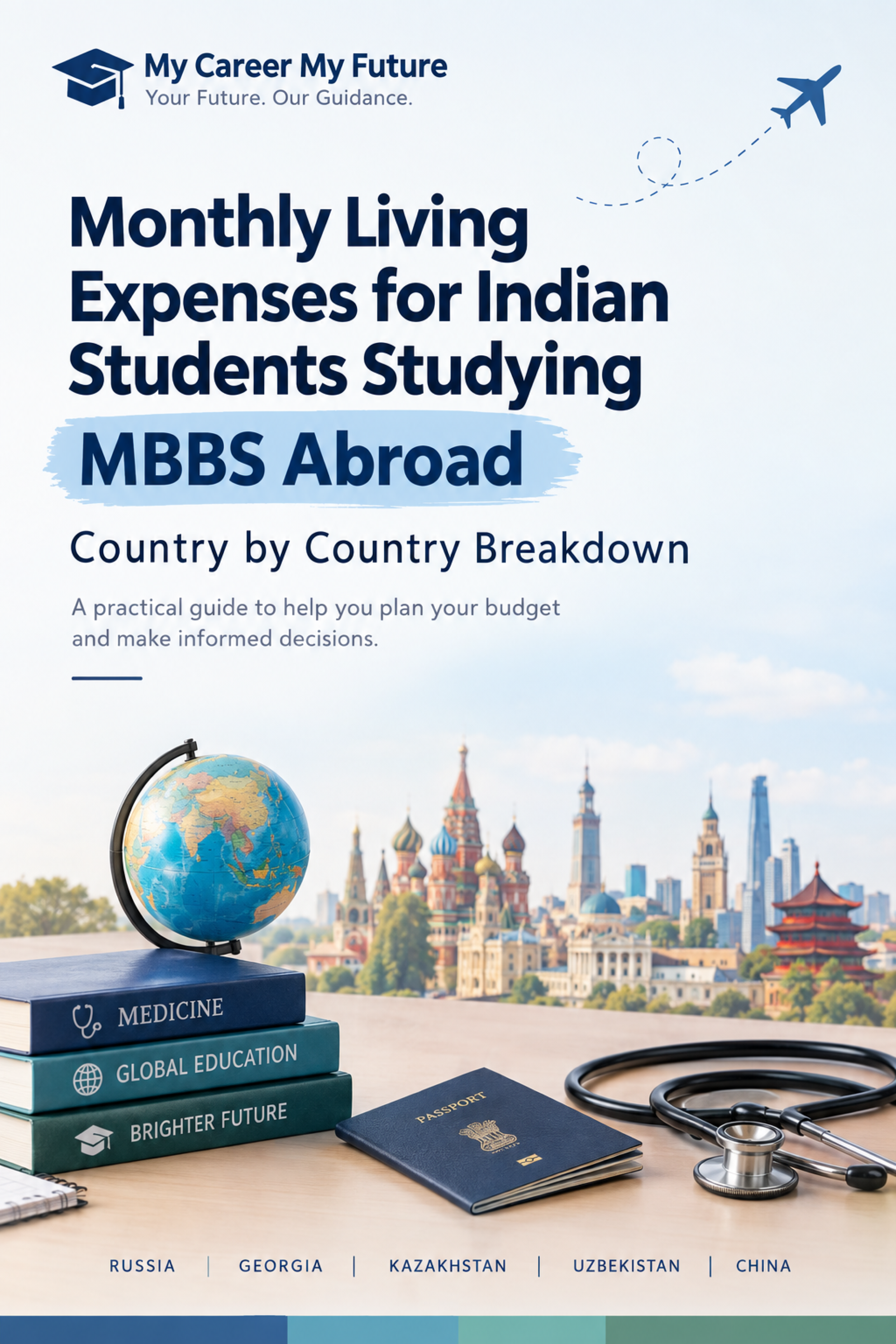
Monthly Living Expenses for Indian Students Studying MBBS Abroad — Country-by-Country Breakdown
By My Career My Future (MCMF) | MBBS Abroad Guide 2026
Introduction
For many Indian students, studying MBBS abroad is an opportunity to pursue their dream of becoming a doctor. However, choosing a university involves more than comparing tuition fees. Students and parents must also consider accommodation, food, transportation, medical insurance, study materials and other everyday expenses.
One of the most common questions parents ask is: How much does it cost to live abroad every month while studying MBBS?
The answer depends on the country, city, accommodation type and personal lifestyle. Some destinations offer affordable hostels and economical food options, while others may have higher living costs, especially in major cities.
In this guide, My Career My Future explains the estimated monthly living expenses for Indian students studying MBBS in Russia, Georgia, Kazakhstan, Uzbekistan and China, helping students and parents plan their budgets more effectively.
1. What Do Monthly Living Expenses Include?
Before selecting a country, it is important to understand the expenses beyond tuition fees.
-
Accommodation: University hostel fees, shared apartments or private rooms.
-
Food and groceries: Mess facilities, groceries and occasional restaurant meals.
-
Local transportation: Buses, metro services, taxis and travel to the university.
-
Medical expenses: Health insurance, medicines and basic healthcare.
-
Study materials: Books, stationery, printing and other academic supplies.
-
Personal expenses: Mobile recharge, toiletries, clothing and recreational activities.
Some universities include meals or accommodation in their packages, while others charge separately. Students should confirm exactly what is covered before making a financial decision.
2. Country-Wise Monthly Living Expenses
The following figures are indicative planning estimates for Indian students. Actual expenses may vary by city, university, exchange rate and lifestyle. They are intended as a general budgeting guide rather than official university quotations.
Russia
Estimated ₹15,000–₹25,000/month
Russia is a popular destination for Indian students pursuing medical education. University hostels can help students manage their budgets, while cooking at home and using public transport may reduce everyday expenses.
Main expenses: Hostel or shared accommodation, groceries, public transport, winter clothing and personal necessities.
Budget tip: Living in a smaller university town may cost less than living in Moscow or other major cities.
Georgia
Estimated ₹18,000–₹28,000/month
Georgia offers a European-style living environment, but expenses can differ significantly between Tbilisi and smaller cities. Rent is often a major factor, particularly for students choosing private accommodation.
Main expenses: Rent or hostel fees, food, transport, utilities and personal spending.
Budget tip: Compare university hostels with shared apartments and check whether utilities are included in the rent.
Kazakhstan
Estimated ₹12,000–₹20,000/month
Kazakhstan may offer manageable living costs for students who use university accommodation and prepare meals at home. Costs depend on the city, housing arrangements and daily habits.
Main expenses: Hostel fees, groceries, transport, internet and personal necessities.
Budget tip: Check the availability of affordable university hostels and nearby grocery stores before finalising your university.
Uzbekistan
Estimated ₹14,000–₹22,000/month
Uzbekistan is another option students may consider when comparing the overall cost of medical education abroad. Shared accommodation, local food and public transportation can help keep monthly spending under control.
Main expenses: Accommodation, meals, local travel, utilities and everyday necessities.
Budget tip: Ask the university for a detailed hostel and meal-fee breakdown instead of estimating expenses from general online prices.
China
Estimated ₹18,000–₹30,000/month
Living expenses in China vary considerably by city. Major metropolitan areas can be more expensive, whereas university accommodation and campus dining may help students manage their budgets.
Main expenses: Hostel fees, meals, local transportation, mobile services and personal purchases.
Budget tip: Confirm hostel availability, meal options and payment methods before departure, and check which digital services you will need for daily life.
Note: These estimates are illustrative and should be confirmed against current university fee schedules and local prices. They may exclude flights, visa costs, tuition fees, one-time admission charges, winter clothing purchases and emergency travel.
3. Comparison Table: Monthly Living Budget
|
Country |
Estimated monthly expenses |
Estimated annual expenses |
|---|---|---|
|
Russia |
₹15,000–₹25,000 |
₹1.8–₹3 lakh |
|
Georgia |
₹18,000–₹28,000 |
₹2.16–₹3.36 lakh |
|
Kazakhstan |
₹12,000–₹20,000 |
₹1.44–₹2.4 lakh |
|
Uzbekistan |
₹14,000–₹22,000 |
₹1.68–₹2.64 lakh |
|
China |
₹18,000–₹30,000 |
₹2.16–₹3.6 lakh |
Annual figures are calculated by multiplying the monthly estimates by 12. They are not university-issued quotations and do not account for inflation or exchange-rate changes.
4. How Can Students Reduce Their Monthly Expenses?
Studying abroad does not necessarily mean spending excessively. With proper planning, students can manage their expenses while maintaining a comfortable lifestyle.
Choose accommodation carefully
University hostels may be more economical than private apartments. They may also provide easier access to classrooms, campus facilities and other students.
Prepare meals at home
Cooking simple meals and buying groceries can help reduce food expenses. Students should also check whether their university provides a mess or cafeteria with suitable meal options.
Use public transportation
Using buses, metro services or student transport passes can be more economical than relying on taxis for everyday travel.
Plan a monthly budget
Set separate limits for accommodation, food, transport and personal expenses. Tracking spending helps students identify unnecessary costs before they become a problem.
Keep an emergency fund
Parents should set aside additional money for unexpected medical expenses, travel, currency fluctuations and other emergencies. Students should not plan their budgets around the minimum possible cost alone.
5. Monthly Living Expenses vs. Tuition Fees: Understand the Difference
One common budgeting mistake is treating living expenses as the complete cost of studying MBBS abroad.
The total cost generally includes:
-
Annual tuition fees
-
Accommodation and food
-
Health insurance and medical expenses
-
Visa and residence-related charges
-
Flights and travel
-
Books, equipment and other academic expenses
-
One-time admission and documentation charges
For example, a student with a relatively affordable tuition fee may still face higher overall costs if the university is located in an expensive city or requires private accommodation.
Therefore, families should compare the total estimated cost of the entire medical programme, not just the advertised tuition fee or monthly living budget.
6. What Should Parents Check Before Selecting a Country?
Before making a final decision, parents should ask the university or authorised representative for:
-
The latest tuition fee schedule and payment deadlines.
-
Hostel availability, room-sharing arrangements and annual charges.
-
Whether food, electricity, heating and internet are included.
-
The approximate monthly grocery and transportation costs.
-
Health insurance coverage and access to medical facilities.
-
Additional costs for visas, documentation and travel.
-
The university's recognition and compliance with applicable rules for Indian students seeking to practise medicine in India.
Students should also check the applicable National Medical Commission (NMC) rules and confirm that the course, university and their planned study pathway meet the relevant requirements. Admission should not be based on low fees alone.
7. How My Career My Future Helps Students Plan Their MBBS Abroad Journey
At My Career My Future (MCMF), we understand that selecting a medical university abroad is a significant academic and financial decision for both students and parents.
Our counselling team helps families compare universities, understand tuition and living costs, review accommodation options and learn about the admission process. The objective is to help students make informed decisions based on their academic profile, financial budget and future plans.
Rather than looking at tuition fees in isolation, students should consider the complete financial picture, the quality of education, the university's facilities and the requirements for practising medicine after graduation.
Conclusion
Monthly living expenses are an important part of planning an MBBS degree abroad. Russia, Georgia, Kazakhstan, Uzbekistan and China each offer different living environments and cost structures, and the amount a student spends will depend on the city, accommodation and lifestyle.
The key is to prepare a realistic budget, verify current university charges and keep additional funds for unexpected expenses. A well-planned decision can help students focus on their education without placing unnecessary financial pressure on their families.
Planning to study MBBS abroad? Contact My Career My Future for guidance on university selection, admission requirements and budgeting.
My Career My Future
Your Future. Our Guidance.
Speak with our counselling team to understand your options for MBBS abroad.
8800726626
9990425566