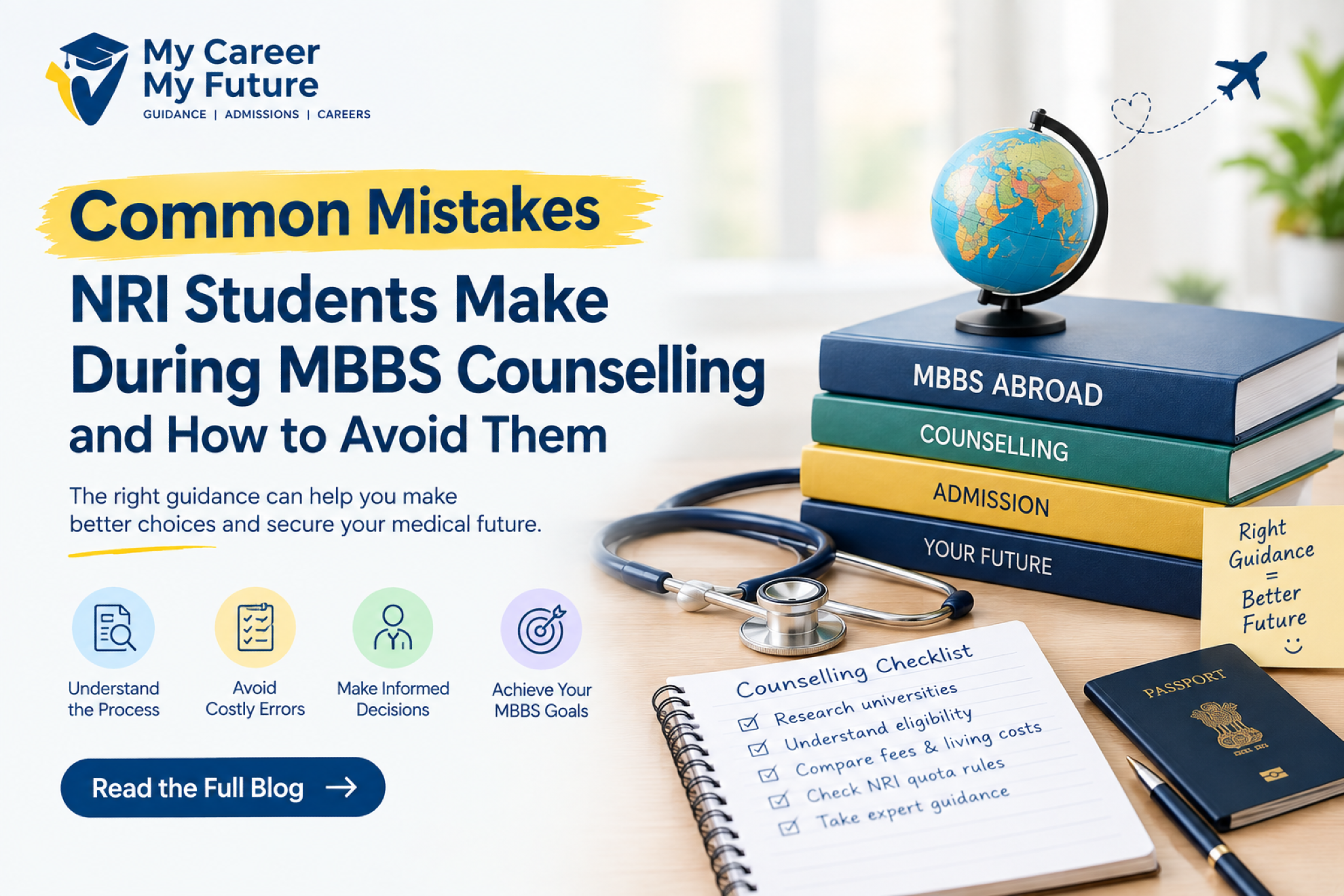
Common Mistakes NRI Students Make During MBBS Counselling and How to Avoid Them
Introduction
MBBS counselling can be confusing for any student, but NRI students often have additional eligibility requirements, documentation, quota rules, and fee considerations to manage.
A small mistake in documentation, choice filling, or understanding the NRI category can create unnecessary complications during the admission process. This is why students and parents should prepare well before counselling begins.
In this blog, My Career My Future (MCMF) explains some common mistakes NRI students make during MBBS counselling and practical ways to avoid them.
1. Not Understanding NRI Eligibility Criteria
One of the biggest mistakes is assuming that having an NRI parent or relative automatically makes a student eligible for every NRI seat.
NRI eligibility can depend on the counselling authority, state, university, and applicable rules. The definition of an NRI, sponsor requirements, and acceptable relationship can vary.
How to avoid it:
- Check the latest counselling notification and prospectus.
- Understand who can sponsor the student.
- Confirm the required relationship between the student and NRI sponsor.
- Keep supporting documents ready before registration.
2. Starting Documentation Too Late
NRI counselling can involve more documentation than students initially expect.
Depending on the counselling process, documents may include passports, visa/residency documents, NRI certificates, sponsorship documents, relationship proof, affidavits, and financial documents.
How to avoid it:
Create a document checklist well before counselling starts and verify:
- Name spelling
- Dates
- Passport details
- Relationship documents
- NRI/sponsor documents
- Academic certificates
- NEET-related documents
Do not wait until the last date of registration to arrange important documents.
3. Assuming Every NRI Seat Has the Same Rules
NRI seats are not necessarily governed by one identical process everywhere.
The counselling authority, state, institution, and category can affect eligibility, documentation, fees, and the admission procedure.
How to avoid it:
Always identify:
Counselling Authority → State/Institution → NRI Category → Eligibility → Documents → Fees → Admission Procedure
This simple sequence can prevent many misunderstandings.
4. Focusing Only on the Fee
NRI students and parents sometimes compare colleges primarily on tuition fees.
However, the overall cost can include tuition, hostel, living expenses, university charges, examination fees, travel, insurance, and other applicable expenses.
How to avoid it:
Before selecting a college, prepare a complete cost estimate covering the entire course duration, rather than looking only at the first-year fee.
5. Not Checking the Counselling Schedule Carefully
Missing a registration deadline, document verification date, choice-filling deadline, or reporting date can create serious problems.
Counselling schedules can also change, so relying on old dates or information from previous years can be risky.
How to avoid it:
- Follow the official counselling website.
- Save important dates in your calendar.
- Check for revised notices regularly.
- Complete registration well before the deadline.
6. Filling Choices Without Proper Research
Choice filling is an important part of counselling.
Some students simply select colleges based on popularity or recommendations from friends without checking factors relevant to their own situation.
How to avoid it:
Research each option based on:
- University and college details
- Applicable recognition and regulations
- Fee structure
- Clinical exposure
- Hospital facilities
- Location
- Hostel and accommodation
- Academic environment
- Future licensing requirements
Create a preference list before the choice-filling window opens.
7. Relying on Unverified Information
WhatsApp groups, social media posts, friends, and unofficial counsellors can provide useful leads, but information may be outdated or incomplete.
This is particularly important when dealing with NRI eligibility, quota rules, fees, and documentation.
How to avoid it:
Use unofficial sources for discussion, but verify important admission information through the latest official notification, prospectus, or counselling authority.
8. Not Keeping Backup Options
Students sometimes focus on one preferred college and ignore alternatives.
Counselling outcomes can depend on rank, seat availability, category, eligibility, and the choices submitted.
How to avoid it:
Prepare a realistic list of:
- Preferred choices
- Alternative choices
- Backup options
This gives you more flexibility during different counselling rounds.
9. Not Understanding the Reporting Process
Getting a seat allotment does not always mean the admission process is finished.
Students may still need to complete document verification, fee payment, physical reporting, or other formalities within a specified time.
How to avoid it:
After allotment, immediately check:
Allotment Letter → Required Documents → Fee Payment → Reporting Date → College Admission Formalities
Keep both digital and physical copies of important documents.
10. Waiting Until the Last Minute for Expert Guidance
NRI counselling can involve several moving parts. Waiting until the final round to understand eligibility or documentation can leave students with limited options.
How to avoid it:
Start counselling preparation early. Discuss your NEET score, NRI eligibility, preferred states/colleges, budget, documents, and backup options before making choices.
NRI MBBS Counselling Checklist
Before counselling, make sure you have reviewed:
✅ NRI eligibility
✅ NEET qualification and applicable requirements
✅ NRI/sponsor documents
✅ Relationship proof
✅ Passport and residency documents
✅ Latest counselling notification
✅ College-wise fee structure
✅ Choice-filling strategy
✅ Backup options
✅ Reporting and admission deadlines
How My Career My Future Can Help
At My Career My Future (MCMF), our counselling team helps students and parents understand the MBBS admission process, including NRI quota requirements, documentation, college options, and counselling procedures.
The objective is to help families understand the process clearly and make decisions based on verified information and their individual circumstances.
📞 Contact My Career My Future:
8800726626 | 9990425566
Conclusion
NRI MBBS counselling requires careful planning. The most common problems arise from misunderstanding eligibility, incomplete documents, missed deadlines, incorrect assumptions about NRI seats, and making choices without sufficient research.
The safest approach is simple: start early, keep your documents ready, understand the applicable rules, research your options, and verify important information from official sources.
With proper preparation, students can approach the counselling process with greater clarity and confidence.
My Career My Future — Guidance | Admissions | Careers