- MADHYA PRADESH - Reopening of Willingness for Upgradation Link
- Telangana Management Quota 2026 – CMR Institute of Medical Sciences Seat Removed from Vacancy
- MCC Round 3 (MBBS/BDS) – SEAT MATRIX UG Counselling 2026
- KEA UGNEET 2026: 3rd Round Online Seat Allotment Note
- Jharkhand Combined Entrance Competitive Examination Board (JCECEB) Counseling Schedule 2026
- Tamil Nadu NEET UG 2026 Round 1 Counselling Schedule Revised
- BFUHS MBBS/BDS Admission 2026 Schedule Out
- TN-Guidelines for MCC
- Gujarat NEET UG 2026 Counselling: ACPUGMEC Begins Online Registration & Document Verification Schedule
- MCC Issues Important Notice for PwBD Candidates Applying for NEET UG Counselling 2026
- KEAM 2026: Kerala Opens Fresh Applications for MBBS & Medical Allied Courses
- Dr. NTRUHS AP MBBS/BDS Counselling 2026-27: Online Registration & Documents List Released
- Tamil Nadu MBBS & BDS 2026 Registration Deadline Announced
- NTA Declares NEET (UG) 2026 Results: 11.21 Lakh Candidates Qualify
- KEA Opens Fresh Registration for MBBS, BDS & AYUSH Admissions 2026
- NTA NEET (UG) 2026 Exam Fee Refund: Bank Account Update Deadline Extended to 31 July
- NEET UG 2026 Refund Update: Last Date to Confirm Bank Details Extended
- Tamil Nadu MBBS 2026 Registration Started
- Tamil Nadu GQ MBBS 2026 – Important Dates Announced
- TN MBBS 2026 MQ Prospectus Released – Important Dates Announced
Teaching University Geomedi, Georgia — Comprehensive Guide for Indian Medical Aspirants
Geomedi Fee Structure 2026: Tuition Fees, Living Costs & Expenses Breakdown
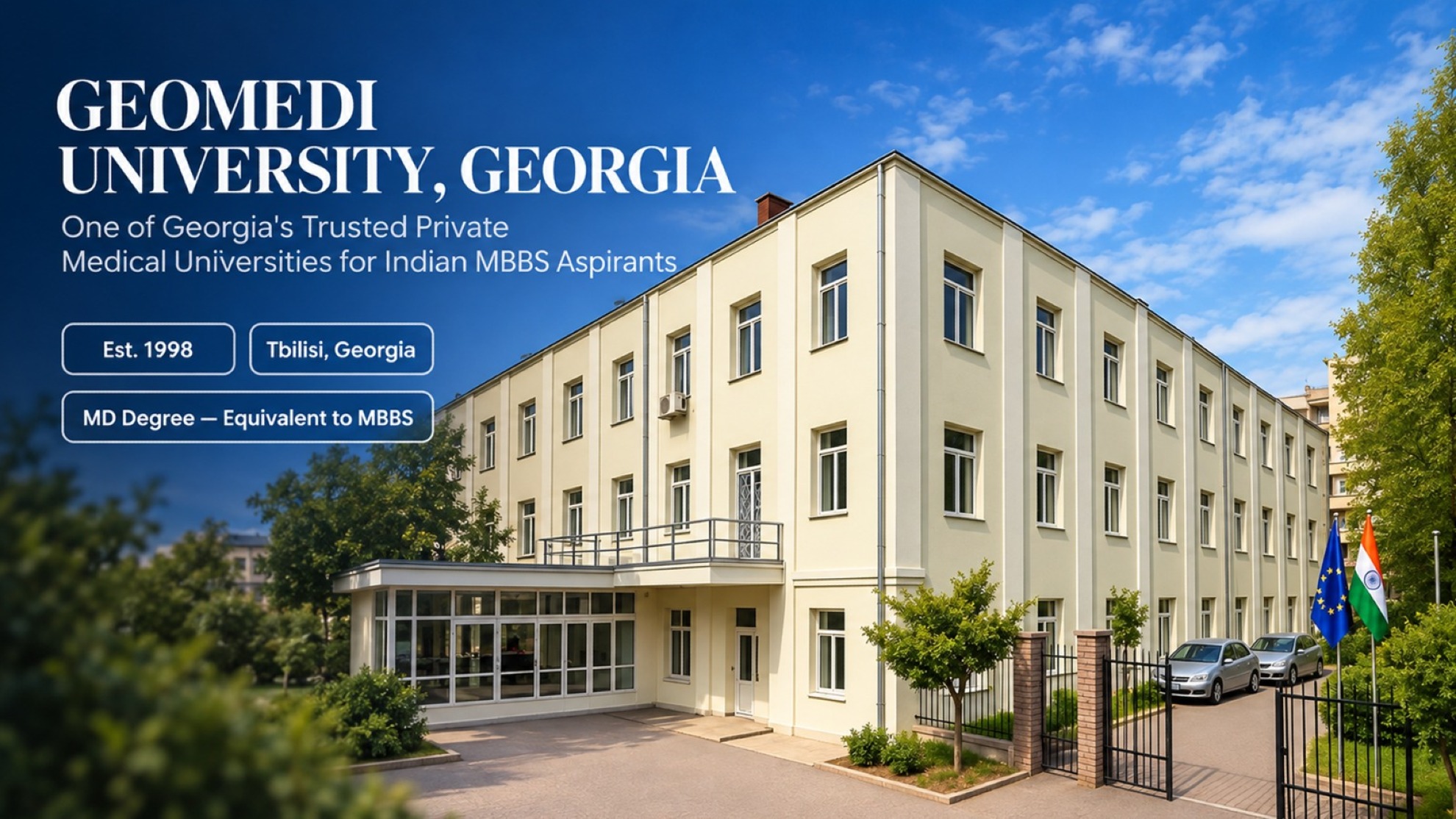
1. About Teaching University Geomedi, Georgia
Teaching University Geomedi (TUG) is a private higher education institution situated in the capital city of Tbilisi, Georgia. Established in 1998 by Professor Marina Pirtskhalava, the university was built with a primary emphasis on high-quality medical education, clinical practice, and modern scientific research.
Global Recognition & International Approvals
The MD/MBBS degree from Teaching University Geomedi is globally valid. It holds certifications and listings with major global medical boards, enabling its graduates to write license exams and practice worldwide:
-
National Medical Commission (NMC / former MCI): Recognized by India’s NMC, making graduates eligible to appear for the FMGE / NExT licensing exams.
-
World Health Organization (WHO) & WDOMS: Listed in the World Directory of Medical Schools (WDOMS), ensuring international degree verification.
-
ECFMG (USA): Certified by the Educational Commission for Foreign Medical Graduates, allowing students to take the USMLE exams for residency and practice in the United States.
-
GMC (UK): Recognized for the PLAB exam pathway in the United Kingdom.
-
FAIMER & WFME: Institutional recognition by the Foundation for Advancement of International Medical Education and Research and the World Federation for Medical Education.
-
Ministry of Education and Science of Georgia: Fully accredited by the National Center for Educational Quality Enhancement of Georgia.
Why It Is Popular Among Indian Students
Teaching University Geomedi has become one of the top destinations for Indian medical aspirants studying abroad due to several key factors:
-
NMC Regulations Compliance: The 6-year course structure (5 years academic + 1 year integrated internship) and 100% English medium curriculum strictly align with the National Medical Commission's Gazette guidelines for foreign medical graduates.
-
Affordable Fee Structure: Tuition is fixed at approximately $5,500 USD per year. Compared to private medical colleges in India (which often cost 70 Lakhs to 1+ Crore), the total 6-year cost at Geomedi remains budget-friendly (around 35 – 42 Lakhs total, including accommodation and living).
-
No Capitation or Direct Entrance Tests: Admission requires no donations, capitation fees, or exams like IELTS/TOEFL. Indian students only need to meet the 50% PCB aggregate criteria in 10+2 and be NEET-qualified.
-
Small Class Sizes & Practical Exposure: Maintains a student-to-faculty ratio of 1:15 in classrooms and 1:8 in practical/clinical rotations, allowing for individualized attention and hands-on clinical exposure at university-affiliated hospitals.
-
Focus on FMGE / NExT Preparation: The curriculum includes dedicated preparation and orientation modules for global licensing exams (FMGE/NExT for India, USMLE for the USA).
-
Safe Living Environment & Indian Amenities: Tbilisi, Georgia, is recognized globally for its low crime rates and safety. Hostels and private mess facilities catering to Indian food preferences are widely available.
2. Why Choose Geomedi for MBBS? – Key Highlights
1. 100% English-Medium Curriculum
-
No Language Barrier in Academics: The entire 6-year Doctor of Medicine (MD / MBBS) program—including theoretical lectures, laboratory practicals, assignments, continuous assessments, and clinical rotations—is conducted strictly in English.
-
Georgian Language Modules: Students take basic conversational Georgian language classes in the initial years, ensuring they can communicate comfortably with local patients during hospital ward rounds in their clinical years.
2. Advanced Clinical Training & Modern Infrastructure
-
University Clinical Center & Affiliated Hospitals: Geomedi University has its own clinical facilities and long-standing partnerships with major teaching hospitals in Tbilisi (such as Tbilisi Central Hospital and Republican Hospital).
-
High-Fidelity Simulation Labs: Features virtual dissection tables, human patient simulators, and surgical skill modules, allowing students to practice clinical procedures in a controlled setting before patient interactions.
-
Early Hands-On Clinical Exposure: Bedside clinical training and ward rotations start in the 3rd year, giving students real-world hospital experience.
3. Small Batch Sizes & Personalized Faculty Attention
-
Favorable Student-Faculty Ratio: Classes maintain small student-to-teacher ratios (approx. 1:15 for lectures and 1:8 for practical/clinical labs), ensuring every student receives direct mentorship.
-
Experienced Academic Staff: The faculty includes over 200 educators, medical researchers, and visiting professors, many of whom hold international research and teaching credentials.
4. International Mobility & Transfer Opportunities
-
Lisbon Recognition Convention: Georgia is a signatory to the Lisbon Recognition Convention, enabling degree recognition and credit transfers across more than 50 European and participating nations.
-
Erasmus+ Exchange Programs: Eligible students can participate in student exchange initiatives with partner European medical institutions, broadening their international exposure.
5. Integrated Licensing Exam Orientation (NExT, USMLE, PLAB)
-
Curriculum Alignment: The academic syllabus is structured to align with global medical licensing exam patterns, including India's NExT / FMGE, the USMLE (USA), and PLAB (UK).
-
Special Coaching Support: Dedicated orientation sessions and mock test series are available for students preparing for NExT / USMLE Step 1 & Step 2 exams.
6. High Standards of Safety & Affordable European Lifestyle
-
Exceptional Public Safety: Tbilisi consistently ranks among the safest student cities globally, offering a low-crime, student-friendly environment for both male and female international students.
-
Cost-Effective Living: Monthly living costs (accommodation, food, utilities, and local transit) range between $250 to $400 USD, making student life considerably cheaper than in Western Europe or North America.
7. Simple, Merit-Based Admissions
-
No Entrance Exams or Capitation Fees: Admissions are based purely on high school marks and NEET eligibility; no IELTS/TOEFL scores or university entrance donations are required.
-
NEET Qualification: Indian students only require a valid NEET-UG qualifying score alongside 50% aggregate marks in PCB in 10+2 (40% for reserved categories).
3. Geomedi Rankings & Recognition
1. University Rankings (National & Global)
-
Country Rank (Georgia): Ranked between 36th and 38th overall among higher education institutions in Georgia. Within private medical-specialized universities, it consistently ranks as a prominent institution for healthcare studies in Tbilisi.
-
World Rank: Ranked between 11,000th and 12,000th globally according to international education metrics directories (such as EduRank and UniRank).
2. Key International Recognitions & Approvals
The Doctor of Medicine (MD) degree awarded by Teaching University Geomedi is recognized worldwide, allowing graduates to sit for national medical licensing examinations and practice internationally:
-
National Medical Commission (NMC / former MCI - India): Fully recognized under NMC regulations. The 6-year continuous program (including the 1-year integrated clinical internship) complies with the NMC's Foreign Medical Graduate Licentiate (FMGL) Gazette regulations.
-
World Health Organization (WHO) & WDOMS: Listed in the World Directory of Medical Schools (WDOMS). This listing validates the university's degree globally for medical registration.
-
Educational Commission for Foreign Medical Graduates (ECFMG - USA): Certified by ECFMG. Geomedi students and graduates are eligible to register and sit for the USMLE (United States Medical Licensing Examination) Step 1 and Step 2 CS/CK exams to pursue medical residency in the United States.
-
General Medical Council (GMC - UK): Recognized for the PLAB (Professional and Linguistic Assessments Board) test path, permitting graduates to register and practice in the United Kingdom.
-
World Federation for Medical Education (WFME) & FAIMER: Accredited and listed with WFME and the Foundation for Advancement of International Medical Education and Research.
-
National Center for Educational Quality Enhancement (Georgia): Institutional accreditation granted by the Ministry of Education, Science, Culture and Sport of Georgia.
-
Lisbon Recognition Convention (Europe): As Georgia is a signatory, degrees issued by Geomedi are recognized across 50+ European and participating countries for higher academic progression and professional mobility.
3. Academic & FMGE / NExT Track Record
-
FMGE Pass Rate Performance: Geomedi regularly reports solid passing percentages on India's Foreign Medical Graduates Examination (FMGE). It ranks among the top performing medical universities in Georgia for Indian students sitting for the licensing exam.
-
USMLE & PLAB Eligibility: Because the teaching framework incorporates problem-based learning (PBL) and clinical case studies, students can begin preparing for USMLE (USA) or PLAB (UK) starting in their clinical years.
4. Geomedi MD Program Details
The Doctor of Medicine (MD) program at Teaching University Geomedi (TUG) is a single-cycle, 6-year undergraduate program designed to train general medical practitioners. The degree is internationally equivalent to the Bachelor of Medicine, Bachelor of Surgery (MBBS) degree awarded in the UK and Commonwealth countries.
1. Program Duration & Credit Structure (ECTS)
-
Total Program Length: 6 Years (12 Semesters).
-
Credit System: The program consists of 360 ECTS credits (European Credit Transfer and Accumulation System).
-
Academic Workload: 1 ECTS credit equals 25 academic hours. Each academic year lasts 42 weeks and delivers 60 ECTS credits (30 credits per semester).
-
Breakdown of Credits:
-
330 ECTS Credits: Compulsory specialty modules, clinical rotations, and scientific-research components.
-
30 ECTS Credits: Elective modules (specialty electives and general electives).
-
2. Year-by-Year Curriculum Breakdown
Years 1 & 2: Pre-Clinical Phase (Basic Sciences & Organ Systems)
The first two years focus on understanding the normal structure, development, and functioning of the human body, along with foundational research skills.
-
Basic Biomedical Sciences: Principles of Medical Genetics, Medical Chemistry, Medical Physics, General Biochemistry, Cytology, and Embryology.
-
Integrated Organ System Modules: Human Anatomy (Systemic & Topographic), Histology, Human Physiology, Molecular Biology, and Cell Biology.
-
Behavioral & Social Sciences: Bioethics, Medical Law, General Psychology, Sociology, and Healthcare Management.
-
Language & Communication: Basic Georgian Language (focused on clinical conversation) and Medical Terminology.
Years 3 & 4: Para-Clinical Phase (Pathology, Diagnostics & Core Skills)
The middle years transition from normal human functions to diseases, mechanisms of illness, drug actions, and basic diagnostic skills.
-
Pathological Sciences: General and Systemic Pathomorphology (Pathoanatomy) and Pathophysiology.
-
Pharmacology & Therapeutics: General Pharmacology, Clinical Pharmacology, and Pharmacogenomics.
-
Microbiology & Immunology: Medical Microbiology, Virology, Parasitology, Clinical Immunology, and Infectious Disease mechanisms.
-
Diagnostic & Clinical Foundations: Propedeutics of Internal Medicine, General Surgery, Preventive Medicine, Forensic Medicine, Epidemiology, and Medical Ethics.
Years 5 & 6: Clinical Phase (Hospital Rotations & Clinical Internship)
The final two years are spent in active clinical rotations across university-affiliated teaching hospitals and specialized medical centers in Tbilisi.
-
Major Clinical Specialities:
-
Internal Medicine: Cardiology, Pulmonology, Gastroenterology, Nephrology, and Endocrinology.
-
Surgical Disciplines: General Surgery, Traumatology, Orthopedics, Urology, Anesthesiology, and Intensive Care.
-
Maternal & Child Health: Pediatrics, Obstetrics & Gynecology, and Neonatology.
-
Specialized Medicine: Emergency Medicine, Neurology, Psychiatry, Oncology, Ophthalmology, Otorhinolaryngology (ENT), and Dermatovenereology.
-
-
12-Month Integrated Internship: Includes practical bedside training, emergency room duties, outpatient clinical practice, and diagnostic procedures to meet the mandatory 1-year internship requirements set by global bodies like the NMC.
3. Teaching Methodology & Assessment Methods
-
Interactive Learning: Problem-Based Learning (PBL), case study discussions, group clinical projects, and practical laboratory assignments.
-
Simulation-Based Training: Students use 3D virtual dissection tables, anatomical models, and high-fidelity patient simulators to master procedural skills before treating real patients.
-
Examination System:
-
Theoretical Exams: Multiple-Choice Question (MCQ) tests, oral exams, and continuous assessment quizzes.
-
Practical Exams: Objective Structured Clinical Examinations (OSCE) and Objective Structured Practical Examinations (OSPE) to assess bedside skills, clinical reasoning, and communication.
-
5. Geomedi Fees Structure 2026 (In-Depth Breakdown)
The fee structure for the 6-year Doctor of Medicine (MD / MBBS) program at Teaching University Geomedi (TUG) is strictly fixed in US Dollars (USD). The university enforces a transparent billing model with no capitation, donation, or unexpected price hikes across subsequent academic years.
1. Complete 6-Year Academic & Accommodation Fee Table
| Academic Year | Annual Tuition Fee (USD) | Annual Hostel & Mess Fee (USD) | Annual Total (USD) |
|---|---|---|---|
| 1st Year | $5,500 | $3,000 – $6,000 | $23,500 – $41,500 |
| 2nd Year | $5,500 | $3,000 – $6,000 | $23,500 – $41,500 |
| 3rd Year | $5,500 | $3,000 – $6,000 | $23,500 – $41,500 |
| 4th Year | $5,500 | $3,000 – $6,000 | $23,500 – $41,500 |
| 5th Year | $5,500 | $3,000 – $6,000 | $23,500 – $41,500 |
| 6th Year | $5,500 | $3,000 – $6,000 | $23,500 – $41,500 |
| Grand Total | $33,000 |
$18,000 – $36,000 |
$51,000 - $69,000 |
(Note: INR values depend on forex exchange rates at the time of fee transfers).
2. Detailed Itemized First-Year One-Time Expenses
When starting the first year, students incur specific administrative, legal, and visa conversion fees:
-
University Application & Processing Fee: ~$200 USD
-
Legal Translation, Apostille & Documentation: ~$350 USD (covers translating high school certificates and passports into Georgian and registering them with the Ministry of Education).
-
Medical Examination & Health Insurance: ~$180 USD / year (compulsory emergency health coverage under Georgian national insurance policies).
-
Temporary Residence Card (TRC): ~$100 – $150 USD (issued by the Public Service Hall of Tbilisi).
-
Initial Settling Allowance (Bedding, Winter Attire, Supplies): ~$200 – $300 USD (one-off personal outlays upon arrival in Tbilisi).
3. Monthly Personal Living Expenses Breakdown (Tbilisi)
Outside of university tuition and direct hostel bills, living expenses in Tbilisi are cost-effective:
-
Food & Groceries (Self-cooking / Local Produce): ~$100 – $150 USD / month (Approx. 8,500 – 13,000)
-
Indian Catering / Mess Option: ~$150 – $200 USD / month
-
Public Transit Student Pass (Metro, Buses, Minibuses): ~$10 – $15 USD / month
-
Utilities (Central Heating, Electricity, Water, Wi-Fi): ~$35 – $65 USD / month
-
Personal & Leisure Allowance: ~$50 – $80 USD / month
-
Average Total Monthly Budget: $250 – $400 USD / month (Approx. 21,000 – 34,000 / month)
4. Payment Schedules & Financial Policies
-
Direct Bank Transfer: All tuition payments are remitted directly to the university's official bank account via SWIFT transfer.
-
Semester-Wise Payment: Tuition can be split into two equal installments per academic year (50% before the Autumn semester, 50% before the Spring semester).
-
Merit-Based Scholarships: Academic performance scholarships of up to $1,000 – $1,500 USD are awarded annually starting from the 2nd year to international students who achieve top GPAs and pass internal university screening assessments.
6. Eligibility Criteria for Geomedi Admission 2026
To secure admission to the Doctor of Medicine (MD / MBBS equivalent) program at Teaching University Geomedi (TUG), international and Indian applicants must satisfy specific academic, age, and regulatory requirements set by the university, the Ministry of Education and Science of Georgia, and the National Medical Commission (NMC).
1. Academic & High School Qualification
-
Qualifying Examination: Candidates must have completed Senior Secondary / Higher Secondary Education (10+2 system or equivalent) from a recognized board (e.g., CBSE, ICSE, State Boards, A-Levels, or equivalent international qualifications).
-
Mandatory Subjects: Core subjects in 10+2 must include Physics, Chemistry, Biology (or Biotechnology), and English.
-
Minimum Aggregate Marks:
-
General Category: Minimum 50% aggregate marks in Physics, Chemistry, and Biology combined.
-
Reserved Category (SC / ST / OBC): Minimum 40% aggregate marks in Physics, Chemistry, and Biology combined (in accordance with standard NMC relaxed guidelines for Indian applicants).
-
2. Mandatory Qualification for Indian Students (NMC Mandate)
-
NEET-UG Exam: Qualifying NEET-UG is mandatory for all Indian nationals applying for medical degrees abroad.
-
NEET Cut-Off Score: Candidates must secure at least the minimum qualifying percentile in NEET-UG corresponding to their admission year.
-
General / EWS: 50th Percentile.
-
SC / ST / OBC: 40th Percentile.
-
-
NEET Score Validity: As per NMC foreign medical graduate guidelines, a valid NEET scorecard remains eligible for foreign medical university admissions for up to 3 years from the date of result declaration.
3. Age Limit Requirements
-
Minimum Age: The applicant must be at least 17 years old on or before December 31 of the admission year.
-
Upper Age Limit: There is no strict upper age cap for international enrollment, provided the student meets all health and academic eligibility benchmarks.
4. Language & Entrance Examination Standard
-
IELTS / TOEFL Exemption: Official English proficiency tests such as IELTS or TOEFL are not required, provided the medium of instruction during high school (10+2) was English.
-
University Screening / Interview: The university conducts a short online video interview or basic language evaluation to verify the candidate’s conversational English capabilities and academic motivation before issuing an official offer letter.
-
No Capitation / Entrance Test: No additional institutional entrance tests, donations, or capitation fees are required for enrollment.
5. Documentation & Health Requirements
-
Valid Passport: Must hold an active international passport valid for at least 18 to 24 months from the date of visa processing.
-
Medical Fitness Certificate: Applicants must present a certified medical clearance stating freedom from major communicable diseases, including a negative HIV blood test report.
7. Admission Process for Geomedi – Step by Step
The admission procedure at Teaching University Geomedi (TUG) for the Doctor of Medicine (MD / MBBS equivalent) program is streamlined, fully digital, and transparent. Below is the comprehensive step-by-step path from initial application to campus registration in Tbilisi.
1.1. Registration & Online Document Submission:Initial Application.
Submit the official online application form along with scanned copies of mandatory documents:
-
10th & 12th Grade Marksheets / Certificates
-
Valid International Passport (minimum 18 to 24 months validity)
-
NEET-UG Scorecard (for Indian candidates, valid up to 3 years)
-
Digital Passport-Size Photographs
2.2. Document Verification & Online Interview:Academic Assessment.
The university's admission committee reviews the submitted academic credentials. Following successful screening, the candidate undergoes a brief online video interview (via Zoom or Teams):
-
Objective: Assesses basic conversational English language proficiency (B1 level) and motivation for medical studies.
-
Outcome: Upon clearing the interview, the university issues a Conditional Offer Letter within 3–5 working days.
3.3. Translation, Apostille & Ministry Approval:Legal Authorization.
To formalize student enrollment in Georgia, all educational documents must be legalized:
-
Documents are translated into the Georgian language, notarized, and apostilled by the Ministry of External Affairs (MEA) in the student's home country.
-
The translated files are submitted to the Ministry of Education and Science of Georgia for recognition and equivalence validation.
-
Duration: Ministry approval typically takes 15 to 30 days.
4.4. Rector's Order & Tuition Fee Deposit:Official Invitation.
Upon receiving Ministry approval, the university Rector issues the official Rector's Order (Acceptance Letter):
-
The student receives the university's official SWIFT bank account details.
-
The student remits the first-year or first-semester tuition fee directly to the university's account.
-
The university then dispatches the official Invitation Letter & Fee Receipt required for visa processing.
5.5. Student Visa Application (D5 Visa Category):Consular Clearance.
Apply for the Long-Term Student Visa (Category D5) through the Georgian Embassy or VFS Global center:
-
Key Visa Documents: Official Ministry Approval Letter, Rector's Order, Fee Payment Receipt, Bank Statement (showing sufficient funds), Travel/Health Insurance, and Accommodation Guarantee Letter.
-
Processing Time: Visa approval generally takes 15 to 30 days.
6.6. Departure, Airport Reception & Campus Enrollment:Arrival & Setup.
Upon receiving the visa approval:
-
Travel: Book flights to Shota Rustaveli Tbilisi International Airport (TBS).
-
Arrival: University representatives greet students at the airport, assist with local transfers, and arrange temporary/hostel check-in.
-
Final Registration: Submit physical documents to the university registrar, complete medical health checkups, open a local bank account, and apply for the Georgian Temporary Residence Card (TRC).
8. Accommodation in Georgia for Geomedi Students
Teaching University Geomedi (TUG) partners with off-campus housing providers and facilitates private rental options in Tbilisi.
Option A: Partnered Student Hostels & Private Dormitories
-
Room Configurations: Offered on a twin-sharing (2 students per room) or triple-sharing (3 students per room) basis. Rooms are gender-segregated across dedicated floors or separate building blocks.
-
Furnishings & Room Amenities: Rooms come fully furnished with individual beds, mattresses, study desks, ergonomic chairs, bookshelves, wardrobes, central heating systems, and high-speed Wi-Fi access.
-
Shared Facilities: Floors feature shared kitchens (equipped with stoves, refrigerators, and microwaves), laundry facilities (washing machines and drying racks), and common study/recreational lounges.
-
Security & Safety: Partnered hostels feature 24/7 security personnel, mandatory CCTV surveillance at access points, biometric or keycard entry, and night curfews (typically 11:00 PM).
-
Average Hostel Cost: Range between $200 and $300 USD per month (approx. $2,400 to $3,600 USD annually), inclusive of heating, water, and basic utility charges.
Option B: Independent Private Apartments
-
Shared Apartment Rentals: Senior students often transition to renting private apartments in Tbilisi neighborhoods (such as Isani, Samgori, or Saburtalo) located along the metro line for quick commute access to the university.
-
Cost Distribution:
-
1-Bedroom Apartment: ~$300 – $400 USD per month (shared by 2 students; ~$150 – $200 USD each).
-
2-Bedroom / 3-Bedroom Apartment: ~$500 – $700 USD per month (shared by 3 to 4 students; ~$130 – $180 USD each).
-
-
Utility Costs: Monthly utility bills (electricity, water, central gas heating in winter, garbage disposal, and internet) run between $40 and $70 USD total per flat.
9. Life in Georgia for Indian Students
1. Indian Food Options & Mess Facilities
-
Indian Mess Services: Specialized Indian messes and tiffin services operate across Tbilisi. These subscription plans offer home-style North and South Indian meals (dal, sabzi, roti, rice, sambar, and non-veg options).
-
Subscription Pricing:
-
Vegetarian Mess (2 meals/day): ~$95 – $120 USD per month (Approx. 8,000 – 10,000).
-
Veg + Non-Veg Mix Mess: ~$115 – $145 USD per month (Approx. 9,500 – 12,000).
-
-
Self-Cooking Infrastructure: Shared hostel kitchens allow self-cooking. Indian spices, basmati rice, lentils, and fresh produce are accessible at Asian grocery shops and supermarket chains (Carrefour, Spar, Fresco) in Tbilisi.
2. Climate, Safety & Daily Commute
-
Safety: Georgia ranks among the safest countries globally. Low crime rates and friendly local authorities make it safe for international male and female students day or night.
-
Weather Adjustments:
-
Summers: Warm ($22^\circ\text{C}$ to $32^\circ\text{C}$).
-
Winters: Cold ($2^\circ\text{C}$ to $-5^\circ\text{C}$) with light snowfall. All buildings, hostels, and public transit are equipped with central heating systems.
-
-
City Transportation: Students use an integrated student transit pass for the Tbilisi Metro and city buses at discounted rates (~$10 to $15 USD per month). Taxi apps like Bolt and Yandex Go are widely available and cheap.
10. FMGE / NExT Performance & Coaching Support at Geomedi
1. Official Performance Metrics (NBEMS Data)
-
Statistical Performance Track Record: According to National Board of Examinations in Medical Sciences (NBEMS) institute-wise performance reports, candidates from Teaching University Geomedi Faculty of Medicine recorded a 29.64% FMGE pass rate in 2024 (with 83 of 280 candidates qualifying).
-
Historical Trend: The university's pass percentage reached 47.97% in 2022 and 25.00% in 2023. Overall, Geomedi maintains an average pass percentage hovering between 25% and 35%, which consistently places it near or above the general country-wide average for foreign medical graduates.
-
Comparison to Global Standards: Because national FMGE pass percentages across major foreign destinations (such as Russia, Kazakhstan, and Kyrgyzstan) generally range between 15% and 25%, Geomedi’s structured academic framework helps keep its students above average.
2. Curriculum Integration & NExT Alignment
-
Question Pattern Familiarity: The university’s continuous evaluation system includes Multiple Choice Questions (MCQs) and Problem-Based Learning (PBL) clinical case vignettes starting from the 3rd academic year. This approach aligns with the analytical structure of NExT Step-1.
-
Organ-System Based Modules: Basic science subjects (Anatomy, Physiology, Pathology, and Pharmacology) are taught in integrated blocks during Years 1–4, reinforcing core concepts required for licensing exams.
-
Objective Structured Clinical Examinations (OSCE): practical clinical evaluations prepare students for procedural skills and bedside communication, which directly translates to NExT Step-2 requirements.
3. On-Campus & Online Coaching Support Infrastructure
-
Self-Study Schedule Flexibility: The university structures semester timetables to allow dedicated study hours. Indian students actively utilize these blocks to complete online video modules, test series, and question banks (Q-banks) through leading Indian coaching portals (e.g., Marrow, PrepLadder, Cerebellum).
-
Faculty Orientation & Seminars: Periodic revision seminars and clinical problem-solving workshops are organized by guest lecturers and core academic staff to bridge gaps between European medical practices and Indian exit exam requirements.
-
Library & Digital Database Access: Geomedi provides access to digital medical platforms (including EBSCOhost, Medline, and Elsevier), giving students access to international journals, e-textbooks, and clinical reference materials.
11. Pros & Cons of Geomedi – An Honest Assessment
Choosing to study medicine abroad requires evaluating both the operational strengths and potential limitations of an institution. An objective breakdown of the advantages and challenges associated with Teaching University Geomedi (TUG) provides clear perspective for prospective students.
Pros (Advantages)
-
100% English-Medium Curriculum: All theoretical lectures, practical sessions, assignments, and written/oral examinations are conducted entirely in English. There is no requirement to complete a preparatory foundation year or take medical coursework in a foreign language.
-
Full Global & NMC Compliance: The program spans 6 full years (including a mandatory integrated clinical internship), aligning with the National Medical Commission's (NMC) Foreign Medical Graduate Licentiate (FMGL) regulations. It is registered with WDOMS, WHO, ECFMG, and GMC, allowing graduates to sit for international licensing exams (NExT, USMLE, PLAB).
-
Fixed, Cost-Effective Fee Structure: At approximately $5,500 – $6,000 USD per year, tuition remains relatively low compared to private medical colleges in India or Western Europe. The university charges zero capitation or entrance donation fees.
-
Small Class & Practical Ratios: Class sizes maintain a low student-to-teacher ratio (~1:15 for classroom sessions and ~1:8 in practical/laboratory rotations), encouraging individualized attention and hands-on interaction.
-
High-Tech Simulation Center: The campus incorporates modern simulation labs, anatomical models, and virtual dissection tools, allowing students to refine clinical procedures prior to direct hospital rotations.
-
Safe Living Environment: Located in Tbilisi, Georgia, the university offers access to a city consistently ranked among the safest globally, featuring efficient public transit and low crime rates.
Cons (Disadvantages & Challenges)
-
Georgian Language Requirement for Clinical Rotations: Although classroom instruction is strictly in English, learning basic conversational Georgian is necessary starting in the 3rd and 4th years. Local hospital patients primarily speak Georgian, meaning bedside history-taking and patient interactions require local language skills.
-
Lower Patient Load Compared to India: Georgia's total population is approximately 3.7 million. Consequently, while university-affiliated hospitals feature modern facilities, the absolute volume and diversity of acute clinical cases are lower than what students encounter in high-density Indian public hospitals.
-
Sub-Zero Winter Weather: Winters in Tbilisi drop below freezing ($0^\circ\text{C}$ to $-5^\circ\text{C}$) with seasonal snowfall. While all campus buildings and accommodations feature central heating, the climate shift requires physical adaptation for students coming from tropical regions.
-
Mandatory Licensing Exam: Graduates must prepare for and pass the mandatory NExT/FMGE licensing screening exam upon returning to India in order to register and practice legally. This necessitates consistent self-study throughout the 6-year program.
-
No Direct On-Campus University Hostels: Geomedi relies primarily on partnered off-campus hostels and private rental accommodations in Tbilisi rather than large, fully owned on-campus dormitory complexes
12. Geomedi vs Other Universities – How Does It Compare?
When choosing a medical university, prospective students typically evaluate options across three categories: Indian Private Medical Colleges, Other Top Georgian Medical Universities, and Alternative Abroad Destinations (Russia & Kazakhstan).
1. Comprehensive Comparison Matrix
| Factor / Feature | Teaching University Geomedi (Georgia) | Indian Private Medical Colleges | Alternative Universities in Georgia (e.g., TSMU / DTMU) | Medical Universities in Russia / Kazakhstan |
| Annual Tuition Fee | ~$5,500 – $6,000 USD | 12 Lakhs – 25 Lakhs+ / year | ~$6,000 – $8,000 USD | ~$3,000 – $5,000 USD |
| Total 6-Year Program Cost (Tuition + Hostel) |
~$40,850 – $43,850 USD (Approx. 35 – 39 Lakhs) |
70 Lakhs – 1.2+ Crore |
~$48,000 – $58,000 USD (Approx. 42 – 52 Lakhs) |
~$22,000 – $32,000 USD (Approx. 20 – 30 Lakhs) |
| Donation / Capitation Fee | Zero | High / Common (in many management seats) | Zero | Zero |
| Medium of Instruction | 100% English (All 6 Years) | English | 100% English | English (Bilingual shift in some regional tracks) |
| Course Duration & Internship | 6 Years (5 Yrs + 1 Yr integrated internship) | 5.5 Years (4.5 Yrs + 1 Yr internship) | 6 Years | 6 Years |
| NMC Gazette Compliance | Fully Compliant | Fully Compliant | Fully Compliant | Varies (Must check specific course length) |
| Class Size Ratio | Small (~1:15) | Large (1:100+ in lecture halls) | Medium to Large (~1:25 to 1:30) | Medium to Large (~1:20 to 1:30) |
| FMGE / NExT Pass Rate | ~25% – 36% | N/A (Direct registration) | ~30% – 45% | ~15% – 25% |
2. Key Comparative Takeaways
A. Geomedi vs. Indian Private Medical Colleges
-
Cost Difference: Studying at Geomedi costs nearly 50% to 60% less than securing a private management quota seat in India.
-
Admission Path: Admission at Geomedi is based strictly on high school eligibility and qualifying NEET-UG, eliminating high capitation fees or management seat bidding.
-
Class Dynamics: Geomedi maintains batch sizes of ~15 students per practical section, providing more direct interaction with professors compared to crowded Indian private lecture auditoriums.
B. Geomedi vs. Other Georgian Universities (e.g., TSMU, DTMU, University of Georgia)
-
Affordability in Georgia: Geomedi sits in the mid-tier price segment in Tbilisi. While premier state institutions like Tbilisi State Medical University (TSMU) charge tuition up to $8,000 USD/year, Geomedi charges around $5,500 – $6,000 USD/year, providing a similar European curriculum framework at a lower tuition cost.
-
Clinical Focus: While larger universities manage bigger cohorts, Geomedi’s smaller enrollment scale allows for easier access to clinical simulation labs and rotation allocations in affiliated city clinics.
C. Geomedi (Georgia) vs. Russia & Kazakhstan
-
Budget vs. Quality Balance: Universities in Kazakhstan and Russia offer lower tuition fees ($3,000 – $4,500 USD/year), making them cheaper overall. However, Georgia offers a European credit system (ECTS), full 100% English medium across all 6 years, and higher average FMGE/NExT pass rates.
-
Living Environment: Tbilisi provides a milder winter climate (temperatures rarely drop below $-5^\circ\text{C}$) compared to severe sub-zero winters in central Russia ($-20^\circ\text{C}$ or lower).
13. Student Reviews & Testimonials
Feedback from current students and Indian alumni at Teaching University Geomedi (TUG) highlights key insights regarding academic delivery, practical clinical exposure, campus environment, and living standards in Tbilisi.
1. Academics & Clinical Training
-
Interactive Teaching Methodologies: Students appreciate the small batch sizes (~1:15 ratio), which allow direct interactions with professors during lectures and lab sessions.
-
Simulation-Based Learning: Indian students highlight the university's Simulation Medicine Clinic and Rehabilitation Center. The availability of virtual dissection tables and anatomical mannequins helps students master procedural skills before commencing hospital rotations.
-
Hospital Exposure: Senior students (Years 4–6) value the clinical rotations across affiliated clinics in Tbilisi. However, many emphasize that taking the initiative to practice conversational Georgian is essential to communicate effectively with local hospital patients.
2. Faculty & International Student Support
-
Approachable Academic Staff: Students frequently praise the faculty members for being accessible outside class hours to clarify academic doubts or guide research projects.
-
Safety & Security: Both students and parents report high levels of satisfaction regarding personal safety. Tbilisi is recognized as a safe environment for international students, with university coordination assisting with local residence permits and onboarding.
3. Campus Life & Indian Community
-
Active Indian Community: With hundreds of Indian students enrolled across different batches, campus life includes celebrations for major festivals like Diwali, Holi, and Independence Day.
-
Food & Accommodation: Students note that while the university does not own large central dormitories, partnered off-campus hostels and nearby private apartments provide convenient living arrangements. Indian mess facilities and self-cooking kitchens make dietary management straightforward.
4. Representative Student Testimonial Summaries
-
Sivanantham (1st Year MD Student from India):
"Coming to Geomedi was a major step toward fulfilling my dream of becoming a doctor. The learning environment is welcoming, the culture in Tbilisi is student-friendly, and the academic structure in English makes the transition smooth."
Hanan (MD Student from Chennai):
"The small class sizes mean we get direct attention from teachers during practical sessions. The university environment feels safe, and having Indian food and mess facilities nearby makes settling down in Georgia much easier."
Taking the next step toward securing a seat at Teaching University Geomedi (TUG) requires a structured approach to ensure all academic, regulatory, and documentation criteria are met.
14. Next Steps and Counselling Options for Geomedi Admission
Taking the next step toward securing a seat at Teaching University Geomedi (TUG) requires a structured approach to ensure all academic, regulatory, and documentation criteria are met.
1. Actionable Next Steps for Applicants
-
Step 1: Document Audit & Eligibility Verification
-
Academic Review: Verify that your 10+2 / Senior Secondary marks meet the minimum requirement of 50% aggregate in Physics, Chemistry, and Biology (PCB) (40% for reserved categories).
-
NEET Status Check: Confirm that you hold a valid, qualifying NEET-UG scorecard (valid for up to 3 years for overseas medical studies under National Medical Commission guidelines).
-
Passport Validity: Ensure your international passport has a minimum validity of 18 to 24 months from the date of application submission.
-
Step 2: Verification of Institutional Approvals
-
Cross-check the official status of Teaching University Geomedi on the World Directory of Medical Schools (WDOMS) website.
-
Verify that the university maintains full accreditation under the National Center for Educational Quality Enhancement (NCQE) of Georgia and aligns with the NMC Foreign Medical Graduate Licentiate (FMGL) regulations.
-
Step 3: Direct Application & Online Interview Booking
-
Register your application through the official university channel or an authorized university representative.
-
Schedule the mandatory online English language evaluation interview conducted by the university admissions panel.
2. Counselling & Support Pathways
A. Official University Admission Office
Applicants can correspond directly with the university’s International Student Department to clarify fee structures, hostel availabilities, and academic schedules:
-
Official Website:
www.geomedi.edu.ge -
International Admissions Contact Email:
geomedi.admission@gmail.com -
Campus Address: 3 Krtsanisi Street, 0114, Tbilisi, Georgia
B. Free One-on-One Career Counselling Sessions
Prospective students and parents can request individual counselling sessions with medical education advisors to review:
-
Itemized budget breakdowns (tuition, hostel, insurance, and personal monthly outlays).
-
Detailed guidance on document apostilling, Ministry of Education recognition in Georgia, and visa filing (D5 Student Visa category).
-
Post-arrival onboarding protocols in Tbilisi (airport pickup, hostel allocation, local SIM activation, and Temporary Residence Card processing).
Why Choose MCMF for MBBS Admission?
Trusted by thousands of NEET aspirants every year for guidance, accuracy and results.
Expert Guidance
Experienced MBBS admission counsellors guide you at every step — from NEET result to final seat allotment.
Personalized Support
Guidance tailored to your NEET score, category, state, budget and preferences.
Complete Counselling
AIQ, State Quota, Deemed Universities and NRI Quota — all in one place.
Latest Updates
Real-time NEET UG counselling notices, important dates and admission alerts via MedTrackr.
Accurate Tools
MBBS College Predictor built on the latest NEET UG data for reliable predictions.
Trusted Pan-India
Thousands of aspirants from every state have secured MBBS seats with our help.
At MCMF, we are committed to making your MBBS admission process smooth, transparent, and stress-free — because your career comes first.
Start your MBBS journey with MCMF