- MADHYA PRADESH - Reopening of Willingness for Upgradation Link
- Telangana Management Quota 2026 – CMR Institute of Medical Sciences Seat Removed from Vacancy
- MCC Round 3 (MBBS/BDS) – SEAT MATRIX UG Counselling 2026
- KEA UGNEET 2026: 3rd Round Online Seat Allotment Note
- Jharkhand Combined Entrance Competitive Examination Board (JCECEB) Counseling Schedule 2026
- Tamil Nadu NEET UG 2026 Round 1 Counselling Schedule Revised
- BFUHS MBBS/BDS Admission 2026 Schedule Out
- TN-Guidelines for MCC
- Gujarat NEET UG 2026 Counselling: ACPUGMEC Begins Online Registration & Document Verification Schedule
- MCC Issues Important Notice for PwBD Candidates Applying for NEET UG Counselling 2026
- KEAM 2026: Kerala Opens Fresh Applications for MBBS & Medical Allied Courses
- Dr. NTRUHS AP MBBS/BDS Counselling 2026-27: Online Registration & Documents List Released
- Tamil Nadu MBBS & BDS 2026 Registration Deadline Announced
- NTA Declares NEET (UG) 2026 Results: 11.21 Lakh Candidates Qualify
- KEA Opens Fresh Registration for MBBS, BDS & AYUSH Admissions 2026
- NTA NEET (UG) 2026 Exam Fee Refund: Bank Account Update Deadline Extended to 31 July
- NEET UG 2026 Refund Update: Last Date to Confirm Bank Details Extended
- Tamil Nadu MBBS 2026 Registration Started
- Tamil Nadu GQ MBBS 2026 – Important Dates Announced
- TN MBBS 2026 MQ Prospectus Released – Important Dates Announced
Georgian American University (GAU) Georgia: Complete MBBS Admission Guide 2026
Explore Program Details, Fee Structure, Eligibility Criteria, and Step-by-Step Admission Process for International Students
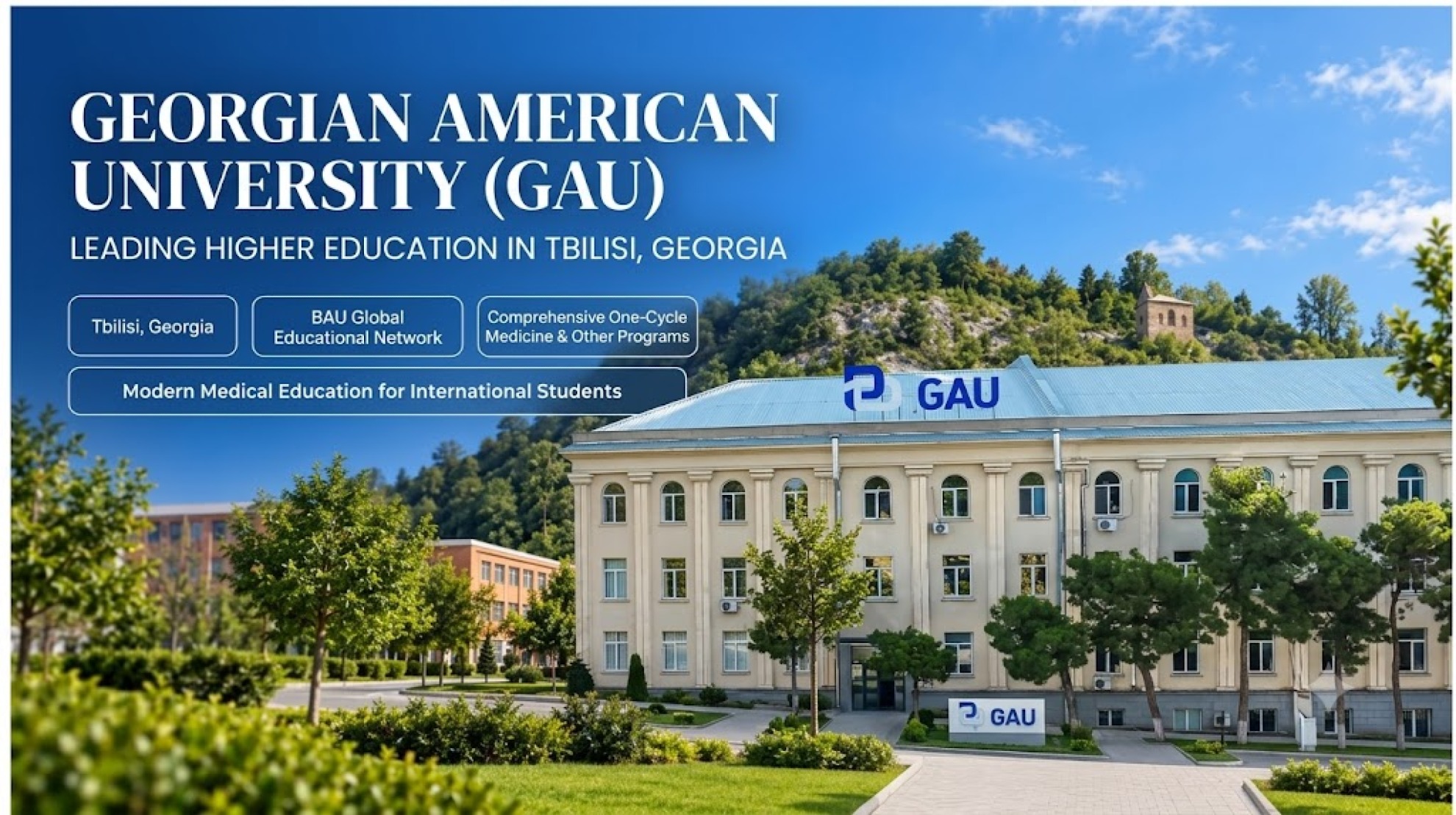
1. About Georgian American University (GAU), Georgia
Georgian American University (GAU) was founded in 2001 in Tbilisi, Georgia, through a collaborative venture between American and Georgian educators and investors. Designed from its inception to align with Western academic frameworks, GAU operates as an accredited, co-educational private institution.
While GAU initially gained prominent recognition for its business and law faculties, it launched the School of Health Sciences and Public Health to meet the global demand for international medical education.
Core Academic Framework
-
Bologna Process & ECTS Standard: GAU operates strictly within the European Credit Transfer and Accumulation System (ECTS), ensuring worldwide degree comparability, smooth credit transfers, and eligibility for international licensing pathways.
-
Spiral Curriculum Structure: The MD (MBBS) program employs a spiral learning architecture. Basic pre-clinical disciplines (anatomy, biochemistry, physiology) are systematically revisited in later years with increasing clinical complexity to reinforce diagnostic and surgical reasoning.
-
Assessment Methodology: Student progression is evaluated using Miller’s Pyramid model of clinical competence. Assessments range from traditional written exams and Multiple Choice Questions (MCQs) to Objective Structured Clinical Examinations (OSCEs) and portfolio presentations.
Key Institutional Features
| Feature | Details |
| Location | Central Campus in Tbilisi, Georgia |
| Student Body | International students representing over 50 countries |
| Instruction Medium | 100% English for international medical degree programs |
| Student-to-Faculty Ratio | ~8:1 to 12:1, ensuring small-group mentoring and interactive practicals |
| Ethical & Code Standards | Mandatory institutional Code of Ethics binding students and faculty |
Educational Philosophy & Clinical Training
-
Early Clinical Exposure: Clinical skills training begins early in the curriculum rather than being strictly deferred to later clerkship years.
-
Longitudinal Research Integration: Students receive continuous instruction in biostatistics, epidemiology, and evidence-based medicine, culminating in mandatory independent research components prior to graduation.
-
Hospital Affiliations: Practical clinical rotations are conducted through university agreements with leading multi-specialty clinical networks and university hospital bases across Tbilisi.
-
Ethics & Public Health Emphasis: Social medicine, healthcare law, medical ethics, and management are integrated throughout the full 6-year study span.
2. Why Choose GAU for MBBS? – Key Highlights
Georgian American University (GAU) has emerged as one of the premier destinations in the Caucasus region for international students pursuing a Medical Doctor (MD / MBBS) degree. Below are the key pillars and highlights that define why aspirants select GAU:
Key Highlights & Core Advantages
-
High Licensing Exam Success (FMGE / NExT):
GAU consistently reports some of the highest FMGE/NExT pass rates among Georgian institutions, outperforming regional and global foreign medical graduate averages. The program's core learning modules are structured to cover international licensing frameworks, including USMLE (USA) and PLAB/UKMLA (UK) requirements.
-
100% English-Medium Curriculum:
The complete 6-year program—including lectures, laboratory training, diagnostic case discussions, and clinical clerkships—is conducted entirely in English.
-
Small Group Learning Environment (~8:1 Ratio):
Classes are structured into small batches, maintaining an optimal student-to-faculty ratio of approximately 8:1 to 12:1. This guarantees individualized mentorship, practical bench time during laboratory sessions, and direct faculty interaction during clinical case presentations.
-
Western Academic Standards & Global Mobility:
Built in alignment with American and European higher education standards, GAU adheres strictly to the Bologna Process and ECTS framework. This ensures degree recognition across Europe and facilitates credit transfers for clinical electives worldwide.
-
Modern Infrastructure & Clinical Simulation:
The university campus covers over 6,000 square meters in central Tbilisi. Facilities include interactive digital classrooms, advanced anatomy and biochemistry laboratories, clinical skill simulation labs, digital library hubs, and high-speed research facilities.
Comparative Snapshot
| Highlight | Feature | Impact on Students |
| Instruction | 100% English | Removes language barriers for academic coursework. |
| Class Size | ~8:1 Student-to-Teacher Ratio | Prevents overcrowding and fosters direct clinical guidance. |
| Curriculum | Integrated USMLE / NExT aligned | Simplifies preparation for post-graduate screening exams. |
| Location | Central Tbilisi, Georgia | Located in a safe, vibrant European capital with low living expenses. |
| Employment | Dedicated Career Services | High employment rate and active support for global residencies. |
3. GAU Rankings & Recognition
The global value of a medical degree depends entirely on institutional accreditations and board recognitions. Georgian American University (GAU) holds comprehensive local and international accreditations, ensuring that its Medical Doctor (MD) graduates are eligible to sit for screening and licensing examinations worldwide.
National & International Rankings
While general world rankings often favor ancient, research-heavy state universities, GAU ranks among the top private medical institutions in Georgia, emphasizing practical healthcare education and licensing pass rates.
-
Country Rank (Georgia): Typically ranked within the Top 15 to Top 30 universities in Georgia.
-
World Rank: Ranked between Top 6,000 to Top 8,900 globally across higher education directories such as Webometrics and EduRank.
-
Graduate Employment Rate: Boasts a ~95% employment rate within six months of graduation and board exam completion.
Global Recognitions & Accreditations
| Governing Body / Registry | Accreditation Status & Significance |
| Ministry of Education and Science of Georgia | Fully authorized and state-accredited higher educational institution under License No. 07/7319. |
| National Medical Commission (NMC, India) | Fully compliant with the NMC Foreign Medical Graduate Licentiate (FMGL) Regulations (2021). Graduates are eligible for NExT / FMGE. |
| World Directory of Medical Schools (WDOMS / WHO) | Listed in the global WDOMS database, making the degree internationally valid for registration and postgraduate practice. |
| WFME (World Federation for Medical Education) | Accredited under WFME standards, ensuring that graduates maintain eligibility for international licensing boards. |
| ECFMG & FAIMER (USA) | Certified by ECFMG and FAIMER. GAU students and graduates are eligible to apply for USMLE Step 1, Step 2 CK, and US residency matching. |
| General Medical Council (GMC, UK) & MCC (Canada) | Recognized, allowing graduates to sit for the UKMLA / PLAB (UK) and MCCQE (Canada) pathways. |
Academic & Student Exchange Network
-
Bologna Process Compliance: Follows the European Higher Education Area (EHEA) frameworks, guaranteeing credit transferability across EU medical colleges.
-
Global Mobility Alliances: Maintains institutional membership with the Association for Medical Education in Europe (AMEE) and active exchange links with clinical institutions in the USA, Canada, and Europe.
4. GAU MD Program Details
The Medical Doctor (MD) program at Georgian American University (GAU) is a 6-year, full-time English-medium undergraduate medical course equivalent to the MBBS degree in India and Commonwealth nations. The curriculum is structured around 360 ECTS credits (60 ECTS per year) and complies with international medical education frameworks established by the World Federation for Medical Education (WFME).
Curriculum Architecture: 4-Phase Modular Progression
GAU employs a partly integrated, body-system-based spiral curriculum model, allowing students to revisit fundamental basic sciences in parallel with clinical, diagnostic, and surgical applications.
Phase I: "From Cell to Body" (Years 1 & 2 / 120 ECTS)
-
Focus: Pre-clinical biomedical foundation, basic body systems, social and behavioral medicine, medical ethics, and introduction to clinical communication.
-
Core Subjects: Human Anatomy, Histology, Biochemistry, General Physiology, Biophysics, Medical Ethics, Biostatistics, and Medical Georgian Language.
-
Practical Training: Early clinical exposure begins in the skills lab with patient interview techniques and basic emergency care.
Phase II: "Mechanism of Disease" (Year 3 / 60 ECTS)
-
Focus: Transition from normal physiology to disease mechanics, physical diagnostics, and clinical reasoning.
-
Core Subjects: Pathology, Pathophysiology, General Microbiology, Immunology, General Pharmacology, General Surgery, and Diagnostic Imaging.
-
Practical Training: Case-Based Learning (CBL) and Problem-Based Learning (PBL) modules to build clinical decision-making skills.
Phase III: "Clinical Medicine" (Years 4 & 5 / 120 ECTS)
-
Focus: Clinical rotations across multi-specialty affiliated hospitals and clinical skill labs.
-
Core Subjects: Internal Medicine, General Surgery, Obstetrics & Gynecolog, Pediatrics, Neurology, Psychiatry, Radiology, Ophthalmology, and ENT.
-
Practical Training: Direct bedside teaching, ward rounds, diagnostic clerkships, and surgical assistance in partner clinics in Tbilisi.
Phase IV: "Preparing for Practice" (Year 6 / 60 ECTS)
-
Focus: Final internship year emphasizing autonomous clinical judgment, emergency care, and licensing board preparation.
-
Core Rotations: Emergency Medicine, Family Medicine, Infectious Diseases, Intensive Care, Advanced Surgery, and Clinical Pharmacology.
-
Integrative Review: Advanced review of basic science concepts integrated with clinical application (USMLE / NExT alignment).
Teaching & Evaluation Methods
-
Pedagogical Tools: System-based modules, Problem-Based Learning (PBL), Case-Based Learning (CBL), and simulation-based clinical skills training.
-
Assessment Standards: Structured around Miller’s Pyramid of Clinical Competence:
-
Written/Oral Examinations and Multiple Choice Questions (MCQs).
-
Objective Structured Clinical Examinations (OSCE) for practical and clinical evaluations.
-
Clinical Logbook & Portfolio Assessment.
-
The Georgian American University keeps a transparent price list for the 6-year English-medium Medical Doctor (MD) program. Take a look at the prices below to understand the academic fees and initial processing cost, and have a rough idea about your living expenses.
Official Academic Fee Breakdown
| Expense Category | Amount (USD) | Estimated Amount (INR)* | Payment Frequency |
| Application / Registration Fee | $100 | 9,400 | One-time (Non-refundable) |
| Annual Tuition Fee | $6,480 | 6,09,120 | Payable annually or per semester ($3,240/semester) |
| 6-Year Total Tuition Fee | $38,880 | 36,54,720 | Across 12 semesters / 6 academic years |
*Calculated at an illustrative exchange rate of 1 USD = 94 INR. Rates are subject to standard currency exchange fluctuations.
Estimated Additional First-Year Costs
In addition to the main tuition fee, international applicants should budget for initial pre-departure and setup expenses during Year 1:
Admission, Apostille & Visa Processing: ~$500-$1,000 (One-time administrative, translation, and visa issuance fees).
Mandatory Medical Insurance: ~$100-$150 per year (Required for student TRC / Temporary Residence Permit renewal).
TRC (Temporary Residence Card) Processing: ~$100-$150 (Paid locally to Public Service Hall, Tbilisi upon arrival).
Estimated Cost of Living in Tbilisi (Accommodation & Personal Expenses)
Because GAU does not operate university-owned dormitories on campus, students typically utilize shared student apartments or private hostel networks near the university:
-
Housing / Rental Expenses: $150 – $300 USD per month (~$1,800 – $3,600 USD per year) depending on single vs. shared studio arrangements.
-
Food & Grocery / Indian Mess: $100 – $150 USD per month.
-
Local Transportation & Utilities: $40 – $70 USD per month (Tbilisi metro, buses, heating, and high-speed internet).
-
Total Estimated Living Budget: ~$350 – $500 USD per month (~$4,200 – $6,000 USD per year).
Summary of 6-Year Outlay
Considering the total tuition (approximately $38,880 USD) along with standard living and accommodation expenses (~$25,000 USD for 6 years), the total projected expenditure for a complete 6-year program is estimated to range between $63,000 to $65,000 USD (~59 Lakhs to 61 Lakhs INR).
6. Eligibility Criteria for GAU Admission 2026
To be eligible to apply for the 6-year English Medium Medical Doctor MD Program at the Georgian American University, candidates must satisfy the age, academic, and statutory requirements prescribed by the Ministry of Education of Georgia and relevant regulatory bodies such as the National Medical Commission of India.
1. Educational Qualification (Class 12 / Higher Secondary)
The candidate has to complete the 12th standard / Higher Secondary Education (10+2) or equivalent High School Diploma with Physics, Chemistry, Biology (PCB) and English with the following percentage of marks:
General / Open: Minimum 50% of the aggregate marks in Physics, Chemistry, and Biology.
Reserved (SC/ST/OBC): Minimum 40% of the aggregate marks in Physics, Chemistry, and Biology.
Physically Challenged: Minimum 45% of the aggregate marks in PCB.
2. Statutory Medical Entrance Exam (NEET UG)
Eligible candidates who opt to study medicine in English medium have to appear for an entrance exam conducted by the National Medical Council of India (NMC) called NEET UG, which is mandatory as per NMC Foreign Medical Graduate Licentiate (FMGL) regulations:
NEET UG Score:
General: Minimum 50 percentile.
SC/ST/OBC: Minimum 40 percentile.
The result of the eligibility test (NEET) will be valid for three years for pursuing medical education.
3. Age & Nationality
Minimum age: Should have completed 17 years by 31st December of the year of admission.
Maximum age: There is no specified maximum age limit as per the Georgian Admission University; however, the candidate must satisfy the health requirements.
Nationality: The course is open to foreign students from all countries except Georgian nationality, with a valid international passport.
4. Language & Proficiency Test
Language Proficiency Test Exemption: Proficiency tests like IELTS or TOEFL are not required if the candidate has studied in an English medium during high school.
English proficiency: The candidate should have a minimum B2 level of proficiency in the English language as per the Common European Framework of Reference for Languages. The language test will be conducted as an online video interview with the university’s board before issuing the formal letter of the conditional offer.
5. Medical Fitness Certificate & Document legalization
Medical Fitness: The candidate has to submit a medical fitness certificate with a negative report of HIV and Infectious diseases.
Legalization of Documents: The mark sheet of 10th and 12th standard / Higher Secondary Examination or equivalent is mandatory and has to be legalized/apostilled from the Ministry of External Affairs (MEA) and the National Center for Educational Quality Enhancement (EQE) of Georgia.
7. Admission Process for GAU – Step by Step
Securing admission to the 6-year English-medium Medical Doctor (MD) program at Georgian American University (GAU) follows a transparent, regulated multi-step process. Below is the detailed chronological path from initial registration to campus arrival in Tbilisi.
Step 1: Document Submission & Initial Application
Applicants submit digital copies of their primary academic and legal credentials for preliminary evaluation.
-
Required Initial Documents:
-
High School (10th) & Higher Secondary (12th) Marksheet/Certificates.
-
Valid NEET-UG Scorecard (for Indian candidates).
-
Valid International Passport (minimum 2 years validity remaining).
-
Passport-size photographs (3.5 × 4.5 cm with white background).
-
Step 2: University Assessment & Provisional Offer Letter
Once documents pass initial screening, GAU schedules an online assessment to confirm English fluency and academic intent.
-
University Interview: A 10–15 minute online video interview via Zoom or Teams assessing basic spoken English and candidate motivation.
-
Provisional Offer Letter: Upon successfully passing the interview, GAU issues a formal Provisional Offer Letter within 2 to 4 business days.
Step 3: Legalization, Translation & EQE Registration
Foreign academic documents must be officially translated into Georgian and submitted to government education authorities in Georgia.
-
Apostille / Legalization: Documents must be apostilled by the Ministry of External Affairs (MEA) in the candidate's home country.
-
EQE Recognition: Translated and apostilled documents are submitted to the National Center for Educational Quality Enhancement (EQE) under the Ministry of Education and Science of Georgia for formal degree equivalence recognition. This step typically takes 2 to 4 weeks.
Step 4: Ministerial Decree & Tuition Payment
-
Ministry Order: Following EQE approval, the Ministry of Education and Science of Georgia issues an official enrollment decree authorizing GAU to register the candidate as a full-time medical student.
-
Official Invoice & Payment: GAU sends the formal invoice for the first semester/year tuition fee ($3,240 USD or $6,480 USD). Payment is made directly to the university's official bank account via international wire transfer.
Step 5: D3 Student Visa & Arrival in Tbilisi
-
Visa Application: Candidates apply for the Category D3 Long-Term Immigration / Student Visa at the Embassy of Georgia or via the official Ministry of Foreign Affairs e-Visa portal.
-
Pre-Departure Prep: Flights are booked to Shota Rustaveli Tbilisi International Airport (TBS).
-
On-Arrival Orientation: Upon arrival, students are assisted with university registration, local SIM setup, health insurance setup, and applying for the Temporary Residence Card (TRC) at the Public Service Hall in Tbilisi.
8. Accommodation in Georgia for GAU Students
Securing safe, comfortable, and well-located housing is a top priority for international students attending Georgian American University (GAU) in Tbilisi. GAU operates primarily as an urban campus in central Tbilisi; therefore, accommodation is managed through private student hostels, off-campus shared flats, and partner residence halls located nearby.
1. Private Student Hostels & Residence Halls
To assist incoming international students (especially during their first year), GAU collaborates with managed private hostel networks in Tbilisi.
-
Facilities & Amenities: Rooms are typically offered on a 2-share, 3-share, or 4-share basis. Standard setups include study desks, wardrobes, beds, central heating, and high-speed Wi-Fi.
-
Safety & Security: Managed student hostels feature 24/7 security staff and CCTV surveillance to ensure a safe living environment.
-
Indian Mess Facilities: Most dedicated international hostels feature an in-house mess offering Indian cuisine (both vegetarian and non-vegetarian / Halal options).
-
Estimated Cost: Managed hostel accommodations with or without mess plans typically range from $1,500 to $3,500 USD per year (~$125 to $290 USD per month), depending on room occupancy and meal inclusion.
2. Private Shared Apartments (Off-Campus Living)
After their first year, many GAU students opt to rent private multi-room apartments with classmates. Popular residential areas near GAU—such as Saburtalo and Vake—offer modern housing options close to public transit.
| Housing Option | Approximate Monthly Rent (USD) | Best Suited For |
| Shared Apartment (2–3 Roommates) | $150 – $250 / student | Students looking to minimize living expenses while sharing kitchen and utility costs. |
| 1-Bedroom Apartment (Solo) | $350 – $500 / month | Senior students seeking complete privacy and independent study spaces. |
Note: Utilities (electricity, water, gas heating during winter, and fiber Wi-Fi) usually cost an additional $40 to $70 USD per month per apartment.
3. Key Factors for GAU Housing
-
Public Transit Access: Tbilisi's Metro system, buses, and minibuses (marshrutkas) make commuting straightforward. Choosing an apartment near the Delisi or Technical University metro stations allows students to reach GAU quickly.
-
Lease Agreements & Safety: Rental contracts are signed officially in English and Georgian. Students receive support from student services and local advisers to verify tenancy terms, security deposits, and building safety before moving in.
9. Life in Georgia for Indian Students
Living in Georgia offers Indian medical students a blend of European culture, high standards of safety, and a manageable cost of living. Tbilisi, where Georgian American University (GAU) is located, has grown into a major hub for international medical aspirants, making the transition abroad smooth for students from India.
1. Cultural Environment & Local Community
-
Welcoming Culture: Georgians are known for their hospitality and friendly attitude toward foreign students.
-
Safe Living Conditions: Georgia consistently ranks among the top 10 safest countries globally and in Europe, with low crime rates and student-friendly local policing.
-
Cultural Diversity: Tbilisi hosts tens of thousands of international students from India, the Middle East, Nigeria, and Europe, creating a vibrant, multicultural student life on and off campus.
2. Food & Dining (Indian Mess & Groceries)
-
Indian Mess Facilities: Private student hostels and catering services in Tbilisi (especially around Saburtalo, near GAU) operate daily Indian mess subscriptions providing North and South Indian home-style meals (veg, non-veg, and Jain options).
-
Indian Restaurants & Grocery Stores: Cities like Tbilisi feature dedicated Indian grocery stores stocking pulses, rice, spices, chapati flour, and snacks. Numerous Indian restaurants are also easily accessible.
-
Self-Cooking: Most private student apartments come equipped with full kitchens, allowing students to cook their own daily meals to manage costs and dietary preferences.
3. Living Expenses & Monthly Budget
Georgia remains far more affordable than Western European countries or North America. Below is an overview of the typical monthly expenses for an Indian student in Tbilisi:
| Category | Estimated Monthly Cost (USD) | Estimated Monthly Cost (INR)* |
|---|---|---|
| Accommodation (Shared Apartment / Hostel) | $150 – $250 | 14,000 – 23,500 |
| Food & Groceries / Mess Plan | $100 – $150 | 9,400 – 14,000 |
| Public Transit (Metro & Bus Student Pass) | $10 – $15 | 940 – 1,400 |
| Utilities (Electricity, Heating, Internet) | $30 – $50 | 2,800 – 4,700 |
| Personal & Miscellaneous Expenses | $40 – $70 | 3,700 – 6,500 |
| Total Estimated Monthly Budget | $330 – $535 | 31,000 – 50,000 |
*Calculated at an illustrative exchange rate of 1 USD = 94 INR.
4. Community, Festivals & Social Life
-
Indian Festival Celebrations: Student associations and university communities actively celebrate major Indian festivals—such as Diwali, Holi, Eid, and Onam—on campus and in local venues in Tbilisi.
-
Travel & Recreation: During academic breaks, students can explore historic landmarks, mountain resorts like Gudauri and Stepantsminda (Kazbegi), or coastal cities like Batumi.
10. FMGE / NEXT Performance & Coaching Support at GAU
For Indian medical graduates, clearing national screening tests—such as the Foreign Medical Graduate Examination (FMGE) or the upcoming National Exit Test (NExT)—is essential to register and practice medicine in India. Georgian American University (GAU) has established a strong academic reputation among Indian students due to its high licensing exam pass rates and integrated test preparation support.
1. FMGE Pass Rates & Performance Track Record
-
Consistently High Success Rates: GAU's FMGE pass rate ranges between 70% and 80%, making it one of the highest-performing medical universities in Georgia.
-
Outperforming Averages: GAU's success rate substantially exceeds both the overall national average for foreign medical graduates returning to India (~20–25%) and the general country average for Georgia (~35–40%).
-
Factors Behind Performance: High performance is driven by small group teaching (8:1 to 12:1 student-to-teacher ratio), mandatory continuous internal assessments, and early integration of clinical diagnostic reasoning.
2. Integrated NExT & USMLE Alignment in Curriculum
GAU’s School of Health Sciences structures its core medical modules to align with major international licensing examination frameworks:
-
Basic & Clinical Sciences Integration: The 6-year spiral curriculum covers organ systems alongside clinical case studies, matching the question patterns of NExT (India), USMLE Step 1 & Step 2 CK (USA), and PLAB/UKMLA (UK).
-
MCQ & Case-Based Assessment: Semester examinations incorporate clinical scenario-based Multiple Choice Questions (MCQs), helping students become familiar with computer-based screening test formats early in their studies.
3. Dedicated FMGE / NExT Coaching Support
Recognizing the importance of licensing exams for international students, GAU provides multiple avenues for dedicated test preparation:
-
On-Campus Prep Workshops: The university hosts supplementary review sessions and problem-solving workshops led by visiting international faculty and Indian medical educators.
-
Access to Online Coaching Platforms: GAU supports students using prominent Indian e-learning and test series platforms (such as Prepladder, Marrow, and Allen Next) through customized study schedules and library study groups.
-
Mock Examinations & Question Banks: Senior students take part in full-length mock tests and question bank reviews during their Phase IV clinical rotations to build exam stamina prior to graduation.
4. Career Pathway Flexibility
Because GAU’s medical program is certified by ECFMG/FAIMER and compliant with WFME standards, graduates have the academic background to pursue postgraduate training in multiple jurisdictions:
-
India: NExT / FMGE screening route for internship and permanent registration.
-
United States: USMLE pathway for ECFMG certification and residency matching.
-
United Kingdom: UKMLA / PLAB route for General Medical Council (GMC) registration
11. Pros & Cons of GAU – An Honest Assessment
Choosing where to pursue a Medical Doctor (MD / MBBS) degree requires balancing academic benefits against daily living realities. Below is an objective breakdown of the main advantages and challenges of studying at Georgian American University (GAU).
Key Advantages (Pros)
-
High Licensing Exam Success Rates: GAU maintains one of the highest FMGE/NExT pass rates among Georgian medical institutions, driven by small-group learning and a curriculum aligned with international board exams (USMLE, PLAB/UKMLA, NExT).
-
Small Class Sizes & Individualized Attention: Batches maintain an approximate 8:1 to 12:1 student-to-teacher ratio, ensuring direct interaction with professors, dedicated bench time during laboratory sessions, and focused clinical case discussions.
-
100% English-Medium Instruction: The full 6-year academic program—including lectures, coursework, internal assessments, and clinical clerkships—is conducted entirely in English.
-
Global Accreditations & ECTS Framework: Accredited by the Ministry of Education and Science of Georgia, WFME, WHO (WDOMS), ECFMG, and NMC (India). Its adherence to the European Credit Transfer and Accumulation System (ECTS) facilitates global degree mobility and credit transfers.
-
Safe, Student-Friendly Environment: Situated in central Tbilisi, GAU provides a safe urban setting with a low crime rate, affordable public transit, and access to Indian food services and student communities.
Key Challenges & Disadvantages (Cons)
-
No On-Campus University Dormitories: GAU operates an urban campus and does not maintain its own university-owned dormitories. Students must rely on off-campus private hostels or rented shared apartments.
-
Language Barrier in Clinical Rotations: While academic lectures are delivered in English, learning basic conversational Georgian is necessary by the 3rd and 4th years to communicate effectively with local patients during hospital ward rounds.
-
Higher Tuition Than State Universities: As a private institution, GAU’s annual tuition ($6,480 USD/year) is higher than some traditional government universities in Eastern Europe, though lower than private medical colleges in India.
-
Cold Winter Climate: Winter temperatures in Tbilisi frequently drop near or below freezing ($0^\circ\text{C}$ to $-5^\circ\text{C}$), requiring an adjustment period for students from tropical climates.
-
Self-Directed Study Demands: Medical education in Georgia heavily emphasizes independent study, continuous continuous assessment, and library research rather than passive classroom spoon-feeding.
Objective Summary Table
| Category | Advantage (Pro) | Challenge (Con) |
| Academics | High FMGE pass rates & USMLE-aligned syllabus | High self-study expectations & rigorous continuous testing |
| Classroom Dynamics | Small batch size (~8–12 students per group) | Higher private tuition fees compared to some state universities |
| Clinical Experience | Multi-specialty hospital rotations in Tbilisi | Basic Georgian language skills required for patient interaction |
| Campus & Housing | Modern facilities & central location in Tbilisi | Off-campus private housing required (no university dorms) |
12. GAU vs Other Universities – How Does It Compare?
When evaluating medical universities in Georgia, foreign applicants usually compare Georgian American University (GAU) with established government institutions like Tbilisi State Medical University (TSMU) and major private universities such as the University of Georgia (UG) and New Vision University (NVU).
Below is an detailed comparative analysis across key academic and operational parameters.
Comparative Matrix: GAU vs. Leading Medical Universities in Georgia
| Comparison Parameter | Georgian American University (GAU) | Tbilisi State Medical University (TSMU) | University of Georgia (UG) | New Vision University (NVU) |
| Institution Type | Private University | Government State University | Private University | Private University |
| Annual Tuition Fee | $6,480 USD (~6.09 Lakhs) | $8,000 – $9,000 USD (~7.5–8.4 Lakhs) | $6,000 – $7,000 USD (~5.6–6.5 Lakhs) | $7,000 USD (~6.58 Lakhs) |
| Student-to-Teacher Ratio | ~8:1 to 12:1 (Highly personalized) | ~25:1 to 30:1 (Larger lecture groups) | ~15:1 to 20:1 (Moderate batch size) | ~10:1 to 15:1 (Focused mentorship) |
| Classroom Experience | Small-group interactive problem-solving | Traditional state lecture-hall format | Modern, large-scale campus environment | Research & simulation lab emphasis |
| FMGE / NExT Track Record | Exceptionally High (~70–80%) | Moderate to High (~35–45%) | Moderate to High (~40–50%) | Moderate (~35–45%) |
| Infrastructure Vibe | Compact, modern central Tbilisi campus | Sprawling historic public university campus | Large traditional student campus with grounds | Modern, tech-forward research center |
| Campus Dormitories | No (Off-campus hostels & flats) | Limited state dorm space | No (Off-campus private housing) | Partnered private hostel networks |
Detailed Head-to-Head Comparisons
1. GAU vs. Tbilisi State Medical University (TSMU)
-
Tuition & Cost: GAU is significantly more affordable ($6,480 USD/year) compared to TSMU's international English-medium program ($8,000–$9,000 USD/year).
-
Batch Sizes: TSMU accommodates much larger student intakes per session, resulting in larger lecture groups. GAU deliberately caps practical study groups at 8–12 students per tutor, leading to higher direct professor interaction during lab work.
-
Licensing Focus: While TSMU holds long-standing brand name recognition as Georgia's oldest state medical school, GAU’s newer curriculum is specifically structured around high-yield USMLE and NExT question patterns, resulting in higher comparative licensing exam pass rates.
2. GAU vs. University of Georgia (UG)
-
Campus Scale: UG is one of Georgia's largest private universities with an expansive student body and active campus life. GAU operates a more focused, compact campus in Tbilisi that prioritizes health sciences and business education.
-
Academic Atmosphere: UG offers a broader university-town environment. GAU offers an intensive medical program where students work in smaller clinical mentoring teams directly under university hospital doctors.
3. GAU vs. New Vision University (NVU)
-
Clinical Setup: NVU owns a dedicated university hospital base, whereas GAU partners with multiple leading multi-specialty clinical networks across Tbilisi for diverse ward rotations.
-
Pricing & Output: Both institutions charge comparable tuition ($6,480 USD at GAU vs. $7,000 USD at NVU), but GAU consistently outperforms NVU on FMGE pass percentages for returning Indian graduates.
Summary Judgment
-
Choose TSMU if: You prioritize a century-old state government brand and are comfortable with larger class sizes and higher tuition fees.
-
Choose UG if: You prefer a massive, sprawling university campus with a broad multi-disciplinary student community.
-
Choose GAU if: Your primary objective is small-group clinical instruction, direct professor mentoring, a modern Bologna-compliant syllabus, and maximizing your chances of passing licensing exams (FMGE/NExT/USMLE) on the first attempt.
13. Student Reviews & Testimonials
Feedback from international students and alumni highlights the lived experience of pursuing an MD (MBBS) degree at Georgian American University (GAU) in Tbilisi. Student reviews consistently focus on five primary operational areas:
1. Academic Atmosphere & Faculty Support
-
Small Class Mentorship: Students frequently praise the small batch sizes (~8 to 12 students). Tutors and professors are accessible, answering individual questions during diagnostic sessions and clinical lab work rather than lecturing to crowded halls.
-
Interactive Learning Style: Feedback highlights the use of Case-Based Learning (CBL) and OSCE preparation from early years, which helps build practical diagnostic confidence.
-
English Proficiency: Students note that academic professors and hospital clinical supervisors communicate fluently in English, removing language barriers during lectures and internal assessments.
2. Clinical Training & Hospital Rotations
-
Hospital Network Diversity: Reviews highlight GAU's partnerships with multiple specialized clinics across Tbilisi. This exposes senior students to a broad variety of real-world patient cases during clinical rotations.
-
Patient Interaction & Language: A recurring piece of feedback from 3rd and 4th-year students is the importance of learning basic conversational Georgian. While clinical preceptors translate medical charts and patient histories into English during ward rounds, students who learn basic local phrases find patient interactions smoother.
3. Campus Life & Student Culture
-
Multicultural Community: Students from India, Nigeria, the Middle East, and Europe study alongside one another, creating a diverse, supportive environment.
-
Clubs & Activities: Beyond the classroom, GAU hosts active student organizations, including the GAU Band and GAU Theatre, along with annual sports tournaments and cultural festival celebrations (such as Diwali, Eid, and New Year).
4. Living in Tbilisi & Safety
-
Safety & Security: Female and male students alike emphasize that Tbilisi is exceptionally safe. Public spaces, university libraries, and transportation run safely at all hours.
-
Food & Accommodation Setup: First-year students appreciate the ready availability of Indian mess subscriptions and grocery markets near Saburtalo. Senior students enjoy moving into private shared apartments nearby.
5. Summary of Overall Ratings
| Parameter | Average Student Score | Primary Student Feedback |
| Academic Quality | 4.8 / 5.0 | Small group focus, structured USMLE/NExT syllabus. |
| Faculty & Mentorship | 4.7 / 5.0 | Accessible professors, personalized lab guidance. |
| Infrastructure & Labs | 4.5 / 5.0 | Modern computer hubs, digital library, simulation setups. |
| Campus Life & Safety | 4.9 / 5.0 | Very safe city, active student clubs, rich cultural events. |
| FMGE / Licensing Support | 4.8 / 5.0 | Outstanding first-attempt pass rates among foreign graduates. |
An Indian student review of Georgian American University provides a direct, firsthand perspective on the campus, faculty support, and living environment in Tbilisi.
13. Student Reviews & Testimonials
Feedback from international students and alumni highlights the lived experience of pursuing an MD (MBBS) degree at Georgian American University (GAU) in Tbilisi. Student reviews consistently focus on five primary operational areas:
1. Academic Atmosphere & Faculty Support
-
Small Class Mentorship: Students frequently praise the small batch sizes (~8 to 12 students). Tutors and professors are accessible, answering individual questions during diagnostic sessions and clinical lab work rather than lecturing to crowded halls.
-
Interactive Learning Style: Feedback highlights the use of Case-Based Learning (CBL) and OSCE preparation from early years, which helps build practical diagnostic confidence.
-
English Proficiency: Students note that academic professors and hospital clinical supervisors communicate fluently in English, removing language barriers during lectures and internal assessments.
2. Clinical Training & Hospital Rotations
-
Hospital Network Diversity: Reviews highlight GAU's partnerships with multiple specialized clinics across Tbilisi. This exposes senior students to a broad variety of real-world patient cases during clinical rotations.
-
Patient Interaction & Language: A recurring piece of feedback from 3rd and 4th-year students is the importance of learning basic conversational Georgian. While clinical preceptors translate medical charts and patient histories into English during ward rounds, students who learn basic local phrases find patient interactions smoother.
3. Campus Life & Student Culture
-
Multicultural Community: Students from India, Nigeria, the Middle East, and Europe study alongside one another, creating a diverse, supportive environment.
-
Clubs & Activities: Beyond the classroom, GAU hosts active student organizations, including the GAU Band and GAU Theatre, along with annual sports tournaments and cultural festival celebrations (such as Diwali, Eid, and New Year).
4. Living in Tbilisi & Safety
-
Safety & Security: Female and male students alike emphasize that Tbilisi is exceptionally safe. Public spaces, university libraries, and transportation run safely at all hours.
-
Food & Accommodation Setup: First-year students appreciate the ready availability of Indian mess subscriptions and grocery markets near Saburtalo. Senior students enjoy moving into private shared apartments nearby.
5. Summary of Overall Ratings
| Parameter | Average Student Score | Primary Student Feedback |
|---|---|---|
| Academic Quality | 4.8 / 5.0 | Small group focus, structured USMLE/NExT syllabus. |
| Faculty & Mentorship | 4.7 / 5.0 | Accessible professors, personalized lab guidance. |
| Infrastructure & Labs | 4.5 / 5.0 | Modern computer hubs, digital library, simulation setups. |
| Campus Life & Safety | 4.9 / 5.0 | Very safe city, active student clubs, rich cultural events. |
| FMGE / Licensing Support | 4.8 / 5.0 | Outstanding first-attempt pass rates among foreign graduates. |
An Indian student review of Georgian American University provides a direct, firsthand perspective on the campus, faculty support, and living environment in Tbilisi.
14. Why Choose MCMF for Your GAU Admission?
Navigating foreign medical admissions, legal document translation, apostille certifications, and immigration procedures can be overwhelming for students and parents. My Career My Future (MCMF) acts as an authorized official advisory bridge between prospective medical aspirants and top Georgian universities, ensuring a transparent, hassle-free admission journey.
Key Advantages of Partnering with MCMF
-
100% Admission & Visa Success Assurance:
MCMF evaluates your academic credentials (10th/12th PCB percentage and NEET score) before submitting applications, guaranteeing that eligible students receive university offer letters and visa approvals without last-minute rejections.
-
Complete Legalization & Translation Handling:
Document verification for Georgia requires multi-tier processing—including state HRD legalization, Ministry of External Affairs (MEA) Apostille, legal translation into Georgian, and registration with the National Center for Educational Quality Enhancement (EQE). MCMF manages the entire documentation lifecycle on behalf of the student.
-
Direct University Coordination & Transparent Pricing:
MCMF works through direct, official university channels with Georgian American University. Tuition fees are transferred directly to GAU’s official bank account—zero hidden charges, zero donation fees, and full fee transparency from day one.
-
Comprehensive On-Ground Support in Tbilisi:
MCMF’s assistance does not stop at the airport departure gate. On-ground representatives in Tbilisi meet students upon arrival to assist with:
-
Airport pickup and transport to housing.
-
Hostel/apartment allotment and lease setup.
-
Local SIM card activation and bank account opening.
-
Mandatory Temporary Residence Card (TRC) processing at the Public Service Hall.
-
Medical insurance and local health registration.
-
-
FMGE / NExT Academic Support & Career Guidance:
MCMF guides students toward university-backed licensing test review sessions and helps connect them with top Indian e-learning coaching platforms and study networks in Tbilisi.
Service Comparison: MCMF vs. Unverified Local Agents
| Admission Parameter | MCMF Authorized Advisory | Unverified Local Agents |
| Fee Transparency | Official university invoice; direct wire transfer | Inflated packages with hidden local agent fees |
| Document Handling | End-to-end MEA Apostille & EQE Ministry approval | Misguided advice leading to visa delays or rejection |
| Local Tbilisi Team | Dedicated on-ground team for housing & TRC setup | Support ends once student boards the flight |
| University Relationship | Official registration partner for top universities | Works through middleman sub-agents |
15. Take the Next Step – Book Your Free Counselling Session
Deciding to study medicine abroad is a major life milestone. Choosing the right institution, understanding international legal approvals, managing documentation, and arranging visa formalities require expert guidance.
By booking a personalized, one-on-one counseling session with an authorized medical education advisory like My Career My Future (MCMF), students and parents can make informed decisions with absolute clarity and peace of mind.
What You Get in Your Free One-on-One Session
-
Profile & NEET Score Analysis: Our senior counselors review your Class 12th Physics, Chemistry, and Biology (PCB) marks and NEET-UG scorecard to evaluate your eligibility for Georgian American University (GAU) and verify full compliance with National Medical Commission (NMC) regulations.
-
Complete Budget & Financial Breakdown: Receive an itemized, transparent expense roadmap covering the full 6-year program—including tuition fees ($6,480 USD/year), hostel/apartment rentals, Indian mess options, health insurance, and visa extension fees—with zero hidden costs or surprise surcharges.
-
Documentation & Legalization Roadmap: Get step-by-step guidance on collecting, translating, and apostilling academic transcripts via the Ministry of External Affairs (MEA), along with processing formal recognition through Georgia's National Center for Educational Quality Enhancement (EQE).
-
On-Ground Tbilisi Transition Plan: Learn about the pre-departure briefings, airport reception in Tbilisi, hostel allotment, local SIM card setup, and Temporary Residence Card (TRC) assistance provided upon your arrival in Georgia.
How to Book Your Free Counseling Session
-
Call / WhatsApp Direct: Reach out directly to our dedicated medical admission desk at +91-8595983683 or +91-9899269899.
-
Submit an Online Request: Visit mycareermyfuture.com to fill out the quick inquiry form with your name, location, and NEET details.
-
In-Person Office Visit: Schedule an appointment to meet our expert counselors in person at our regional office branches (Noida / Faridabad).
16. Frequently Asked Questions About GAU Georgia
1. Is the MD degree from Georgian American University recognized in India and globally?
Yes. GAU is authorized and accredited by the Ministry of Education and Science of Georgia and listed in the World Directory of Medical Schools (WDOMS). The program fully complies with National Medical Commission (NMC) Foreign Medical Graduate Licentiate (FMGL) regulations, making graduates eligible for the NExT/FMGE in India, USMLE in the USA, and UKMLA/PLAB in the UK.
2. What is the total duration of the MD program at GAU?
The program lasts 6 years (12 semesters), which includes integrated clinical clerkships and internship rotations as mandated by the Bologna Process and international medical boards.
3. Is the course taught entirely in English?
Yes. 100% of lectures, laboratory training, diagnostic case studies, and internal examinations are conducted in English. Students also learn basic conversational Georgian during early semesters to assist with patient communication during hospital ward rounds.
4. Are IELTS or TOEFL scores mandatory for admission?
No. Formal language proficiency tests are not required if you completed high school in English. However, candidates must pass a short 10-15 minute online video interview in English conducted by GAU’s admission panel to demonstrate B2-level communication skills.
5. Is qualifying NEET mandatory for Indian students?
Yes. Under NMC regulations, Indian nationals must have a valid NEET-UG qualifying score (50th percentile for General, 40th percentile for Reserved categories) to retain eligibility for licensing exams and medical practice in India after graduation.
6. What is the annual tuition fee at GAU, and can it be paid in installments?
The annual tuition fee is $6,480 USD (~6,09,000 INR). Tuition can be paid in two equal semi-annual installments ($3,240 USD per semester) directly to the university's official bank account.
7. Does GAU have its own on-campus dormitories?
No, GAU operates an urban campus in central Tbilisi and does not own university dorms. However, dedicated private student hostels and off-campus shared apartments are widely available near campus, offering 24/7 security and Wi-Fi.
8. Is Indian food available in Tbilisi for GAU students?
Yes. Managed student hostels around Saburtalo offer dedicated Indian mess plans (vegetarian, non-vegetarian, and Jain). Indian grocery stores stocking basmati rice, spices, and flour are easily accessible near the university.
9. Can I transfer to GAU from another foreign medical university?
Yes, credit transfers are permitted under ECTS guidelines. Candidates must submit their official academic transcript to the university admissions desk for credit evaluation to determine the eligible entry semester.
10. How long does the entire admission and visa process take?
The complete workflow—from document submission and university interview to EQE Ministry recognition and D3 Student Visa issuance—typically takes 4 to 6 weeks.
17. Explore More – Helpful Resources for MBBS Aspirants
To ensure a smooth admission journey and full regulatory compliance, foreign medical aspirants should rely on verified official portals, government databases, and educational reference hubs.
1. Official Institutional & Government Portals
-
Georgian American University (GAU) Portal:
-
Website: gau.edu.ge
-
Resource Use: Access the official School of Health Sciences syllabus, faculty profiles, ECTS credit breakdowns, and academic notices.
-
-
National Medical Commission (NMC India):
-
Website: nmc.org.in
-
Resource Use: Check Foreign Medical Graduate Licentiate (FMGL) Regulations, public notices, and NExT exam guidelines.
-
-
National Center for Educational Quality Enhancement (EQE, Georgia):
-
Website: eqe.ge
-
Resource Use: Verify state accreditation status and monitor educational document recognition in Georgia.
-
-
Ministry of Foreign Affairs of Georgia (e-Visa Portal):
-
Website: evisa.gov.ge
-
Resource Use: Apply for Category D3 long-term student visas and track immigration application status.
-
2. Global Medical Directories & Licensing Boards
-
World Directory of Medical Schools (WDOMS):
-
Website: wdoms.org
-
Resource Use: Verify GAU's listing and check ECFMG sponsor notes for USMLE eligibility.
-
-
Educational Commission for Foreign Medical Graduates (ECFMG / FAIMER):
-
Website: ecfmg.org
-
Resource Use: Review USMLE application requirements, Step 1/Step 2 CK eligibility, and US residency certification.
-
-
General Medical Council (GMC, UK):
-
Website: gmc-uk.org
-
Resource Use: Review UKMLA / PLAB eligibility criteria and primary medical qualification (PMQ) requirements for practicing in the UK.
-
3. Academic Preparation & Advisory Platforms
-
My Career My Future (MCMF) Advisory Desk:
-
Website: mycareermyfuture.com
-
Direct Helpline: +91-8595983683 | +91-9899269899
-
Resource Use: Request personalized documentation assistance, MEA apostille guidance, and on-ground relocation support in Tbilisi.
-
-
Licensing Preparation Tools:
-
Indian Board Prep: Prepladder, Marrow, and Allen Next platforms tailored for NExT/FMGE clinical question banks.
-
USMLE / Global Prep: UWorld, First Aid for the USMLE Step 1, and Pathoma for integrated system-based learning.
-
Why Choose MCMF for MBBS Admission?
Trusted by thousands of NEET aspirants every year for guidance, accuracy and results.
Expert Guidance
Experienced MBBS admission counsellors guide you at every step — from NEET result to final seat allotment.
Personalized Support
Guidance tailored to your NEET score, category, state, budget and preferences.
Complete Counselling
AIQ, State Quota, Deemed Universities and NRI Quota — all in one place.
Latest Updates
Real-time NEET UG counselling notices, important dates and admission alerts via MedTrackr.
Accurate Tools
MBBS College Predictor built on the latest NEET UG data for reliable predictions.
Trusted Pan-India
Thousands of aspirants from every state have secured MBBS seats with our help.
At MCMF, we are committed to making your MBBS admission process smooth, transparent, and stress-free — because your career comes first.
Start your MBBS journey with MCMF